If you’re hearing rustling over the ceiling, or you’ve found a hole at the roofline, you’re probably trying to get squirrels out of the attic without making the damage worse.
I looked at what wildlife agencies and university extension services recommend for attic nests, and they keep coming back to the same careful order of steps.
To get squirrels out of the attic, first check for babies, then let the squirrels leave through a one-way exclusion door on the main hole, and only after the activity stops should you seal every opening with metal they can’t chew through. Don’t nail a board over the hole while they’re still inside, and don’t use poison in an attic.
The same method works for gray squirrels in the day and for flying squirrels at night, with a few extra cautions. This is the attic version of how to get rid of squirrels in the house. Let’s go through it step by step.
How do I know I have squirrels in the attic, not mice or rats?
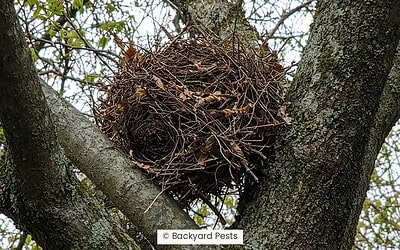
Gray squirrels are noisy in the early morning and late afternoon. The sound is often a heavy rustle or a scramble, not the light ticking of mice. You may also see a squirrel on the roof, a chewed hole at a soffit, fascia, or vent, and a bulky nest of leaves and insulation.
If the noises are only at night, think flying squirrels or rats. Flying squirrels are smaller and can use a slightly tighter opening, and they are protected in some areas. Here’s why some squirrels come out at night and how to tell a squirrel from a rat. For a full list of indoor signs, see 9 easy ways to tell if you have squirrels in your house.
Mice can use a gap the width of a pencil. Squirrels generally need about 1½ inches, and they will chew a weak spot until it is big enough. A flashlight in the attic at the time of day you hear the noise will often show the run, the nest, or daylight coming through the entry hole.
What if there are baby squirrels in the attic?
Wait. In much of the US, tree squirrels have young in late winter to spring and again in late summer to early fall. The Wildlife Center of Virginia notes babies may be present from about February to May and August to October, and that young stay with the mother for roughly 8 to 10 weeks. I go through that calendar in more detail in when squirrels have babies.
If you seal the mother out, she will often chew a new hole to reach the litter, and the young can die in the nest. Leave the main exit open until the family can leave together. If a baby is injured or clearly orphaned, call a licensed wildlife rehabilitator rather than trying to raise it.
How do I use a one-way door to get squirrels out of the attic?
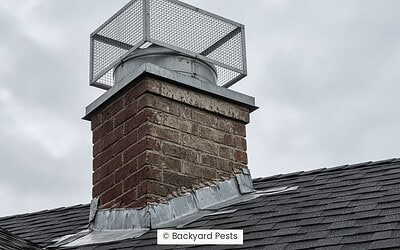
Walk the outside of the house and find every opening at the roofline — soffits, fascia, roof and gable vents, plumbing vents, the chimney, and any gap where two rooflines meet. How squirrels get on and into your roof shows the usual spots. Watch at the noisy time of day to see which hole is the main door.
Close the extra holes first, with metal, so there’s only one way out. Then fit a one-way squirrel exclusion door over that main opening. The squirrel can push out, but the door doesn’t let it climb back in. Leave it in place for several days, until you hear nothing in the attic and you don’t see anyone waiting on the roof. Then take the door off and seal that last hole too.
Do this only when you’re confident there are no dependent young inside. A cold, quiet attic after a few days is a good sign. If activity continues, look for a second hole you missed — that’s common along a long soffit.
How do I get squirrels out of the attic without killing them?
Exclusion is the humane method, and it’s the one extension services start with. Live-trapping in the attic is a last resort, and only if it’s legal where you live. Some states restrict or ban relocating a trapped squirrel, and some species have extra protections. Check your state wildlife agency, or hire a licensed wildlife control operator, before you set a cage in the insulation.
Don’t use poison in an attic. A bait that isn’t labeled for squirrels may be illegal to use that way, and a poisoned squirrel can crawl into a wall and die there. Pets and birds of prey can also be harmed. “Ultrasonic” gadgets and a radio left in the attic are sometimes used to encourage squirrels to leave, but they’re not a substitute for a one-way door and a proper seal — and they won’t help if babies can’t follow the sound out.
How do I seal the attic so squirrels can’t get back in?
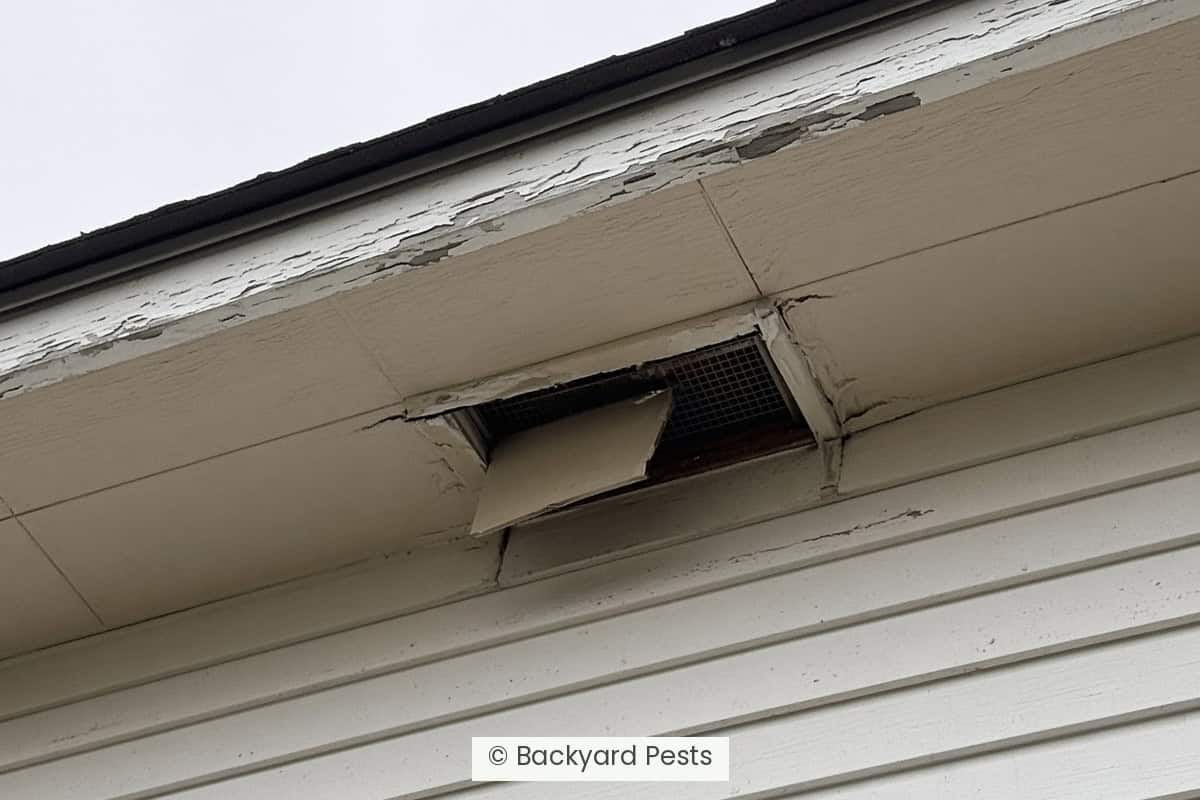
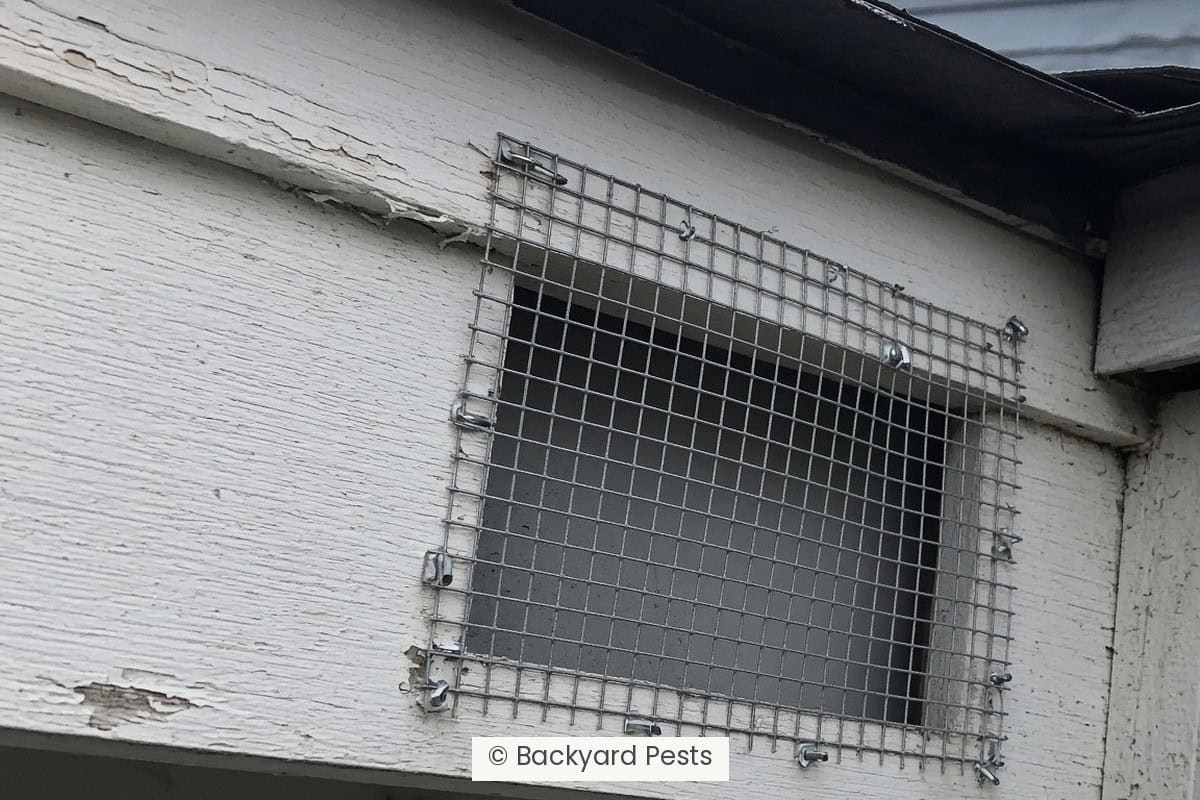
Use metal. Aluminum roll flashing covers chewed wood along a soffit or fascia. ½-inch hardware cloth is a solid screen for vents and larger gaps, fastened so there’s no loose edge. A chimney needs a proper cap once the flue is empty. An aluminum sheet can patch a bigger chewed-through board.
Skip spray foam, rubber flashing, plastic vent covers, and steel wool used on their own. Squirrels chew foam and plastic, and they can pull loose mesh out. If you want to stuff a gap, put metal over the top.
Then take away the easy access and the easy food. Trim branches so they can’t jump to the roof — tree squirrels can jump about 4 feet (1.2 m) — and look at the bird feeder, which is often why they started investigating the house. Smells squirrels hate can be used around a freshly sealed hole as a top-up, but a scent will not replace a metal patch.
Do I need to replace insulation or clean up droppings?
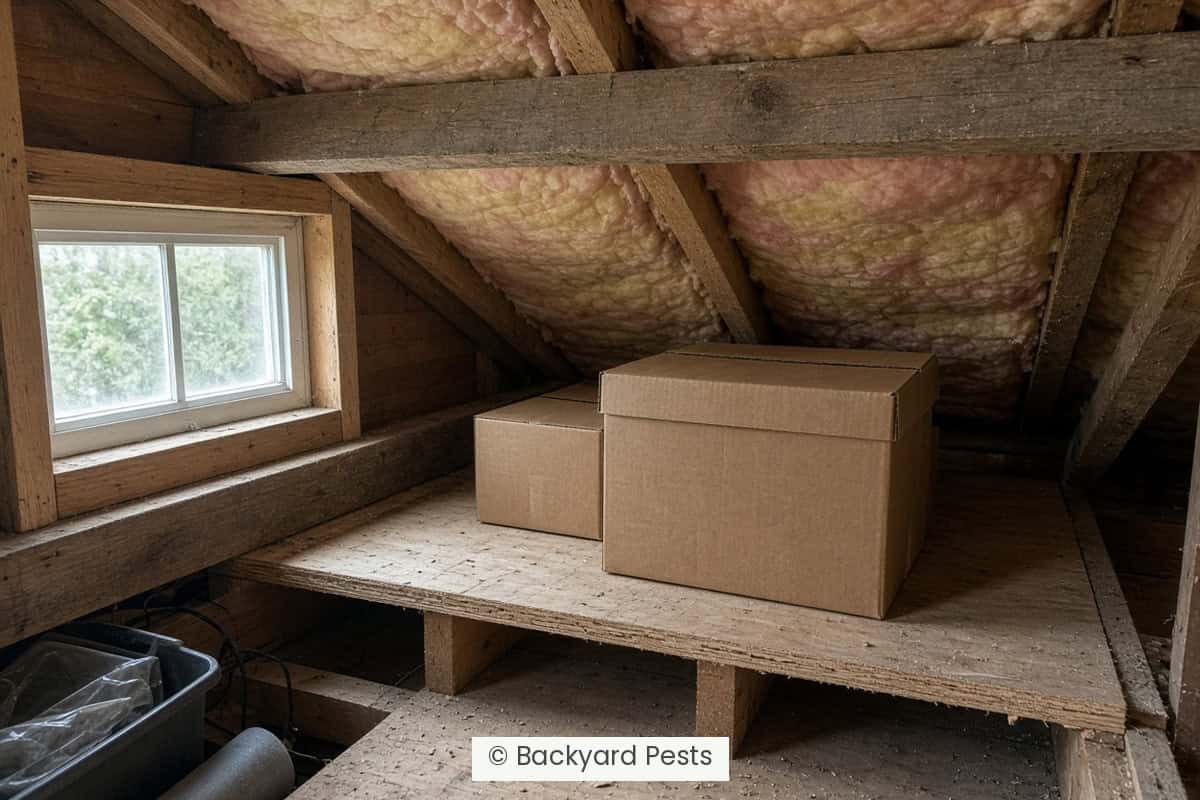
If the nest was small and the insulation is still dry and in place, you may only need to clean the nest area. If the insulation is packed into a nest, soaked in urine, or heavily soiled with droppings, bag it and remove it. Wear gloves, and follow the CDC’s rodent cleanup method: wet droppings and nesting material with a disinfectant, let them soak, then wipe them up. Don’t sweep or vacuum dry droppings, which can send dust into the air.
Air the attic if you can, and wash your hands when you’re done. If the infestation was heavy or you feel unwell after a messy cleanup, talk to a healthcare provider and mention the exposure.
What about flying squirrels in the attic?
The steps are the same: confirm they’re out, use a one-way door, seal with metal. The differences are timing and the law. You’ll need to watch at night, and the entry hole can be a little less obvious. Flying squirrels are protected in some states and localities, so check the rules before you trap. A few people put a nest box in a nearby tree after exclusion, hoping the animals move there; think of that as optional, not as a guarantee, and don’t skip the seal.
Once the attic is quiet and the holes are metal-tight, keep an ear out for a week or two. If the rustling starts again, you missed an opening. It’s much easier to fix that now than after the next litter is born in the insulation.
Save this for later: pin this post so the one-way-door steps are here the next time you hear something in the roof.
Sources:
Wildlife Center of Virginia, Squirrels as Neighbors
University of California Statewide IPM Program, Tree Squirrels
Virginia Department of Wildlife Resources, Problems with Squirrels
Penn State Extension, Tree Squirrels
US Centers for Disease Control and Prevention, How to Clean Up After Rodents