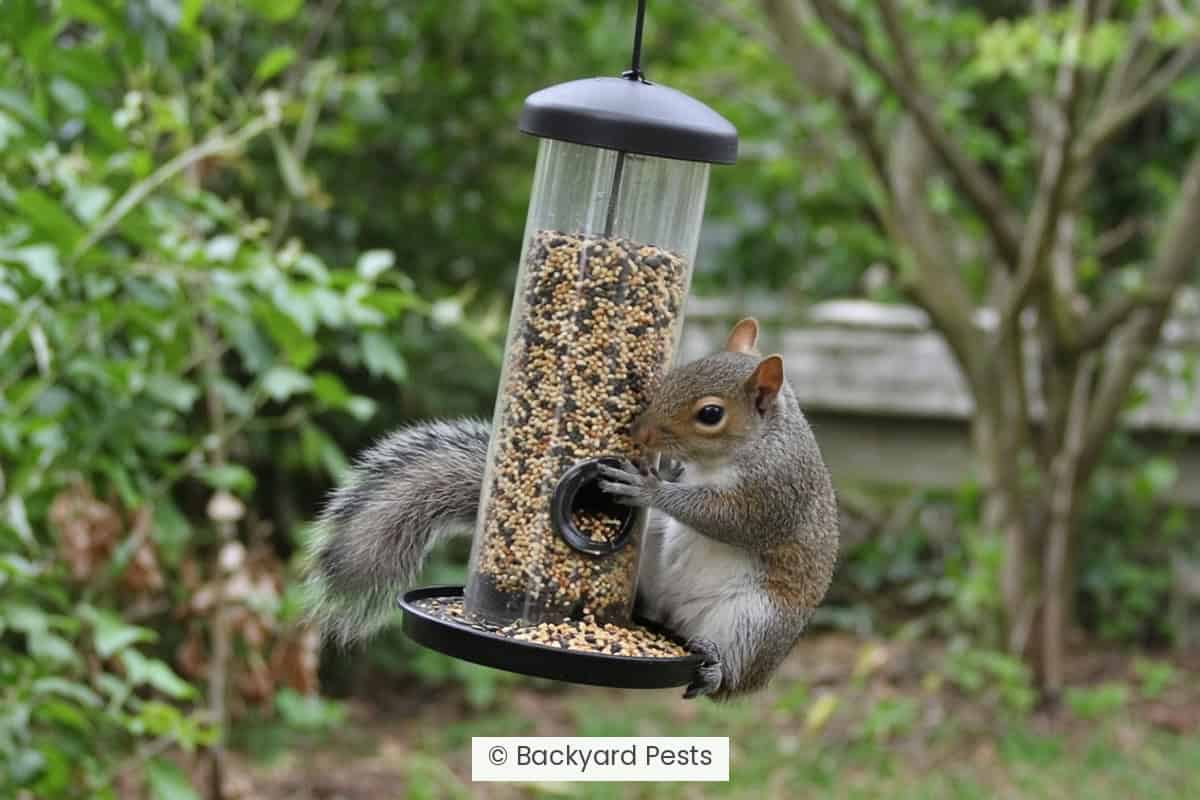
If the bird feeder is empty by mid-morning and a squirrel is hanging off the perch, you’re probably looking for a way to keep squirrels out of the feeder that doesn’t end in a standoff on the lawn.
I went through what wildlife agencies actually suggest for feeders, and it’s less about a “magic” seed and more about the setup.
To keep squirrels out of a bird feeder, put the feeder on a smooth metal pole with a baffle, place it well away from trees, fences, and the roof, and use a feeder that closes under a squirrel’s weight. Safflower seed or cayenne on the seed can help, but spilled seed on the ground will undo the whole plan.
Squirrels are good at this game. You may need to adjust the setup once or twice. That’s normal, not a sign you’ve failed. Let’s look at the details that actually matter, and when it’s simpler to take the feeder down for a while.
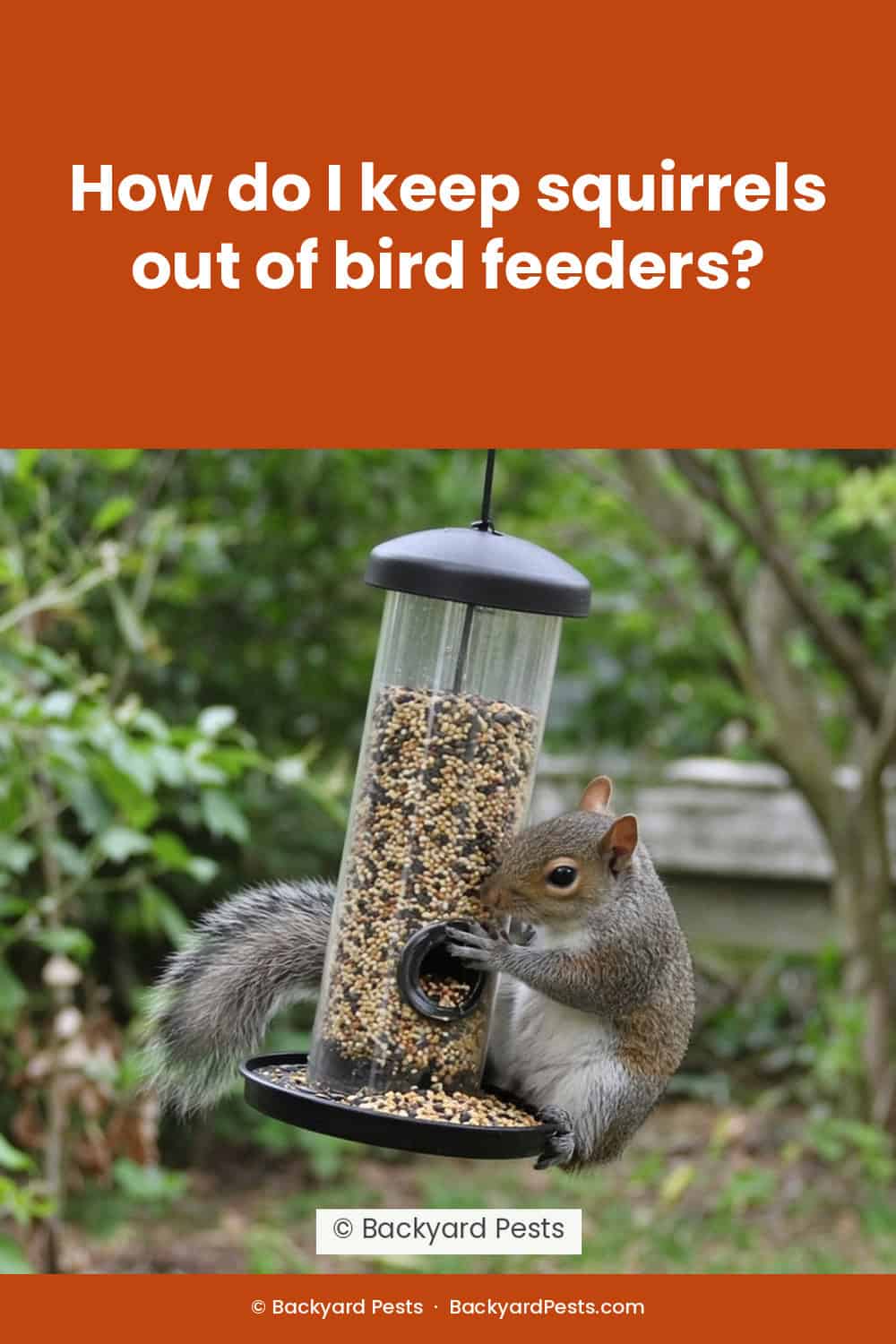
Why won’t my squirrel-proof feeder work?
Usually because of the neighborhood, not the feeder. A squirrel can jump several feet from a branch, a fence, a deck rail, or the roof. Virginia’s wildlife agency suggests placing a feeder at least 15 feet from anything they can jump from, then adding a metal exclusion device on the post. Florida’s guidance is in the same spirit: well away from trees, limbs, fences, and sheds, with a shield on the pole. Other agencies use figures closer to 8 or 10 feet. The practical test is simple: if a squirrel can leap from a launch point onto the feeder, the feeder never gets a fair chance.
Hanging a feeder from a tree branch is the hardest version to protect, because the squirrel can climb down the line or jump from above. A smooth metal pole in the open, with a baffle on the pole, is the setup that holds up.
What is a baffle, and where do I put it?
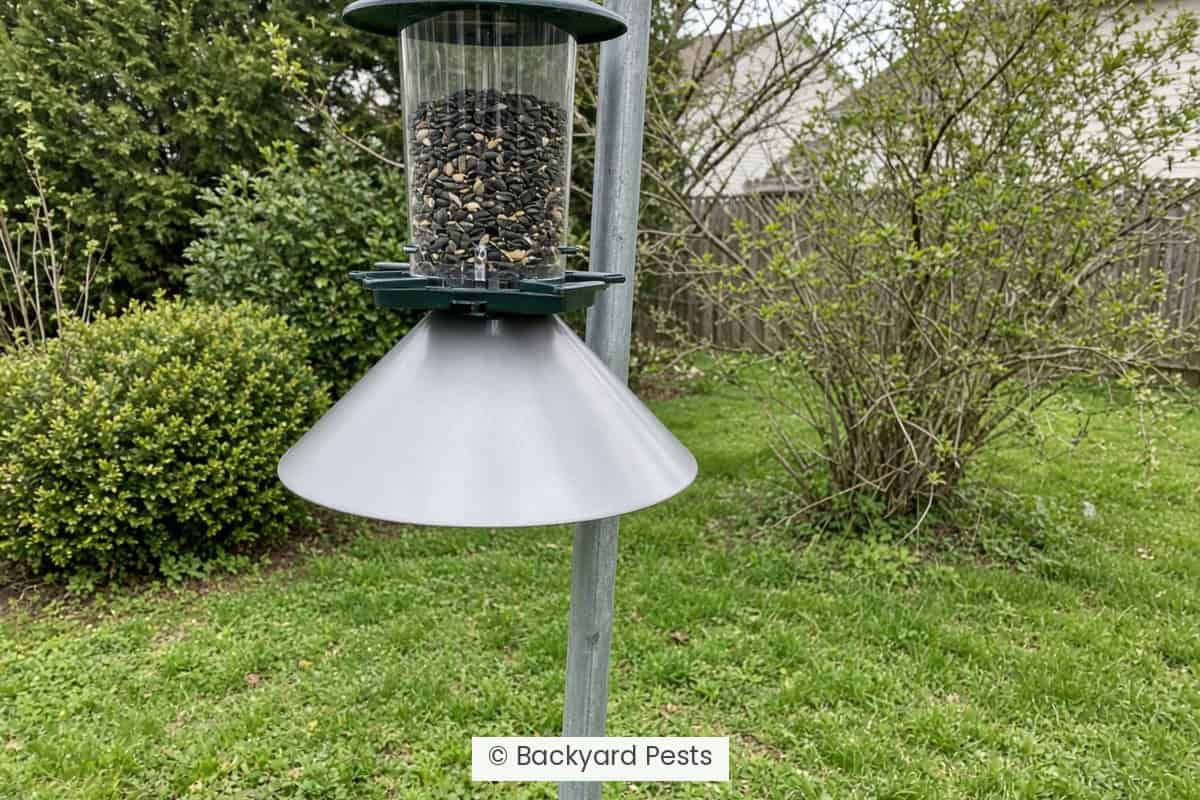
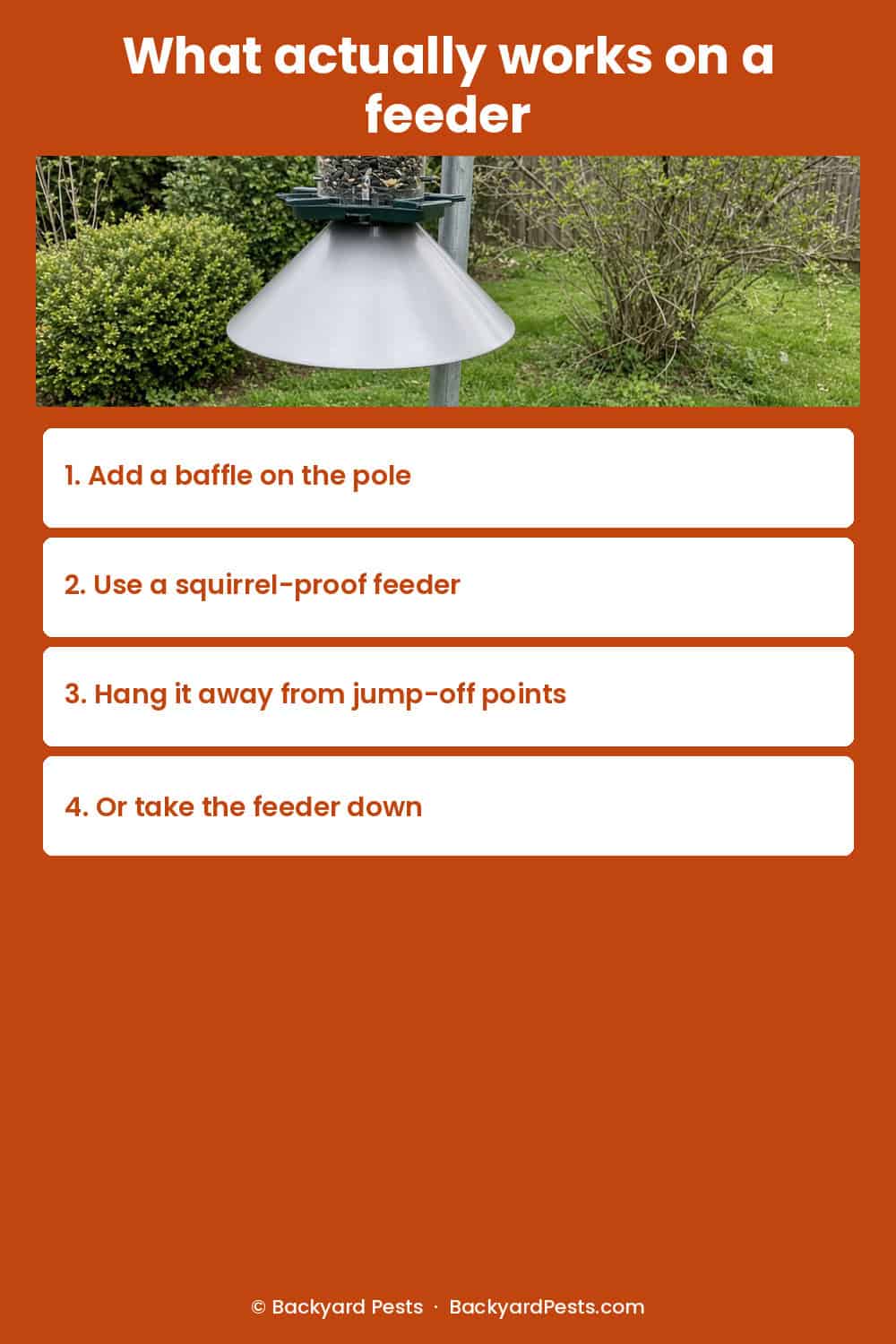
A baffle is a cone, cylinder, or disc on the pole that a squirrel can’t climb over or around. It belongs on the pole, below the feeder, high enough that the squirrel can’t jump from the ground over the top of it. If you hang a feeder from a horizontal wire, people sometimes add spinning bottles or baffles on the wire too, so the squirrel can’t walk the tightrope.
The pole itself should be metal and smooth. Wooden posts are a ladder. Grease on a pole is a trick some agencies still mention; it works until it rains, collects dirt, or the squirrel finds another route. A solid baffle is less messy.
Do squirrel-proof feeders actually work?
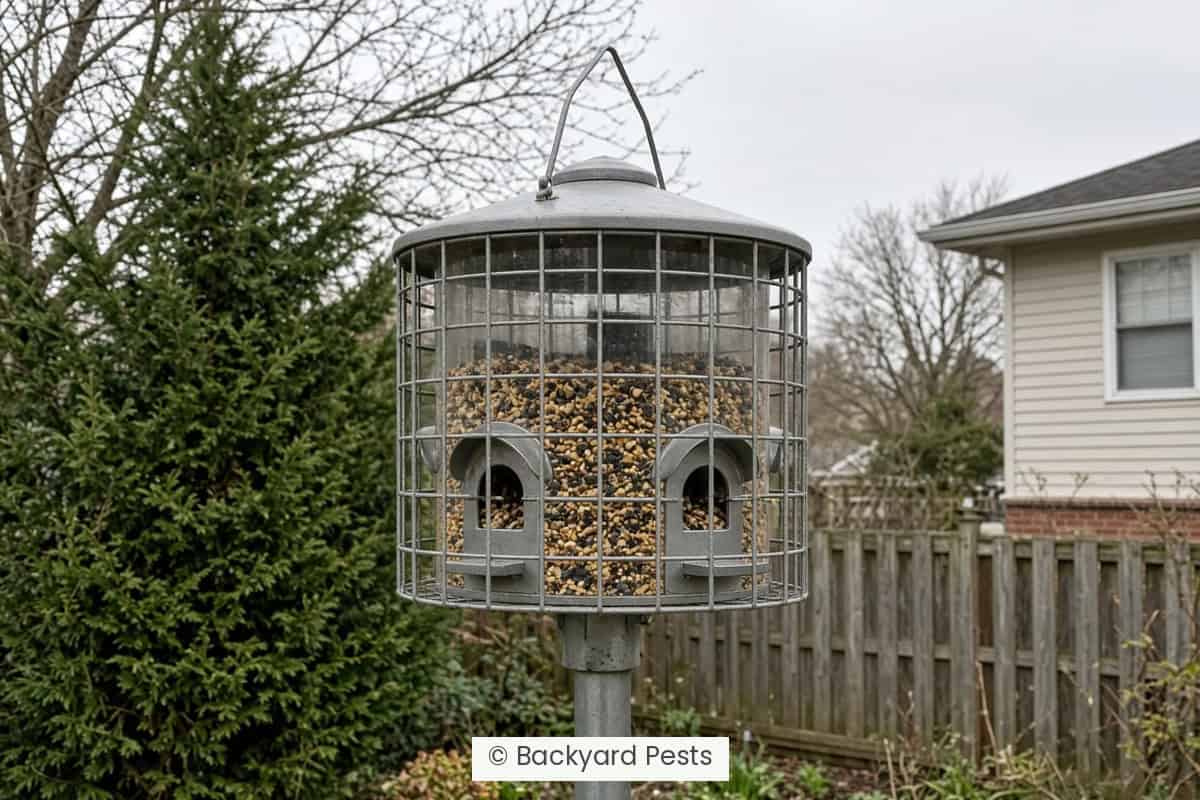
The better ones do, when the placement is right. A Squirrel Buster style feeder closes the ports when a squirrel’s weight hits the outer shroud, while smaller birds can still perch and feed. That’s a different idea from a heavy hopper a squirrel can hang on and raid. A regular hopper bird feeder is fine for birds, but it isn’t a squirrel plan on its own.
No feeder is perfect if it’s under a branch. Buy the closing feeder and put it in the open on a baffled pole. And clean up what hits the ground. Spilled sunflower seed is a second, easier feeder, and squirrels will happily eat there even if the hanging feeder has them stumped.
Does cayenne pepper on bird seed keep squirrels away?
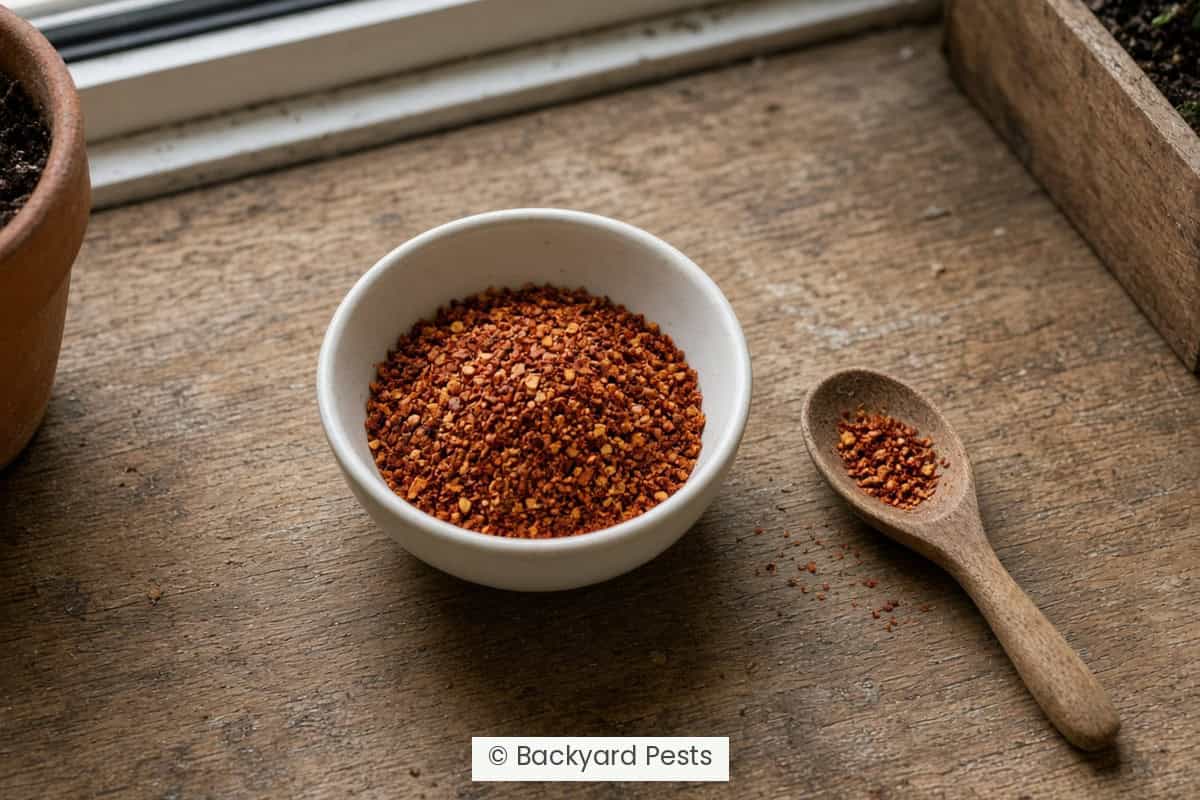
Often, yes, for a while. Birds don’t taste capsaicin — the heat in chili peppers — the way mammals do, so a light coating of cayenne on the seed can make it much less appealing to squirrels while the birds keep eating. Virginia’s wildlife agency mentions chili or cayenne on feed, and pre-treated commercial mixes, as one option. You’ll need to refresh it, and you should avoid breathing in the powder when you mix it.
Safflower seed is the other common tweak. Many squirrels like it less than black-oil sunflower, though some will eat it anyway, and it usually costs more. Neither trick replaces the pole and baffle if the squirrels are determined.
Should I just take the feeder down?
Sometimes that’s the fastest fix, and wildlife agencies say so plainly. If squirrels are using the feeder as a reason to visit the roof or the garden, take it down for a week or two. The birds will find other food. The squirrels often lose the habit of checking that corner of the yard.
This matters even more if you already have squirrels in the house. A feeder near the roofline is one of the usual invitations. Get them out and seal the holes first — here’s how to get rid of squirrels in the house — and keep the feeder down until the attic is quiet.
If you’d rather give squirrels their own food so they leave the bird feeder alone, that’s a trade-off, not a solution. A squirrel feeder can pull some of the traffic away, but it also trains more squirrels to visit, and it can increase yard and garden damage. I wouldn’t add one if the real problem is an attic nest or a dug-up bed.
Will a motion sprinkler or a smell keep them off the feeder?
A motion-activated sprinkler can startle squirrels off a feeding area, especially if seed has been spilling on the ground. Move it now and then so they don’t learn the pattern. Smells and taste sprays around the pole — the ones in 12 smells squirrels hate — may help at the margins. They wear off in rain, and they won’t stop a squirrel that can jump straight onto the feeder.
Fake owls and spinning gadgets rarely last. The squirrel figures them out. Save your energy for placement, a baffle, a closing feeder, and a clean patch of ground underneath.
Once the feeder is less of a buffet, the rest of the garden often calms down too. If they’re still after tomatoes or freshly planted bulbs, the same “make it harder” idea is in how to keep squirrels out of your garden.
Save this for later: pin this post so the pole-and-baffle setup is here the next time the feeder is empty by breakfast.
Sources:
Virginia Department of Wildlife Resources, Problems with Squirrels
Florida Fish and Wildlife Conservation Commission, Living with Squirrels
Wildlife Center of Virginia, Squirrels as Neighbors
University of California Statewide IPM Program, Tree Squirrels