If you’ve already tried to shoo squirrels out of the attic or the garden, you may be wondering how to trap a squirrel — and whether you should.
I looked at what wildlife agencies say about cage traps, and the legal side is the part most people skip.
You can catch a squirrel in a large live cage trap, baited with nuts or seed and checked often, but you should only do this after you’ve read your state’s rules. In some US states, relocating a trapped squirrel is illegal or tightly limited. For a squirrel in a house, a one-way exclusion door is usually the better first step.
A trap is a tool, not a plan. If the hole in the soffit is still open, or the bird feeder is still spilling seed, another squirrel will move in. Here’s when trapping makes sense, how to do it as humanely as the law allows, and what not to do.
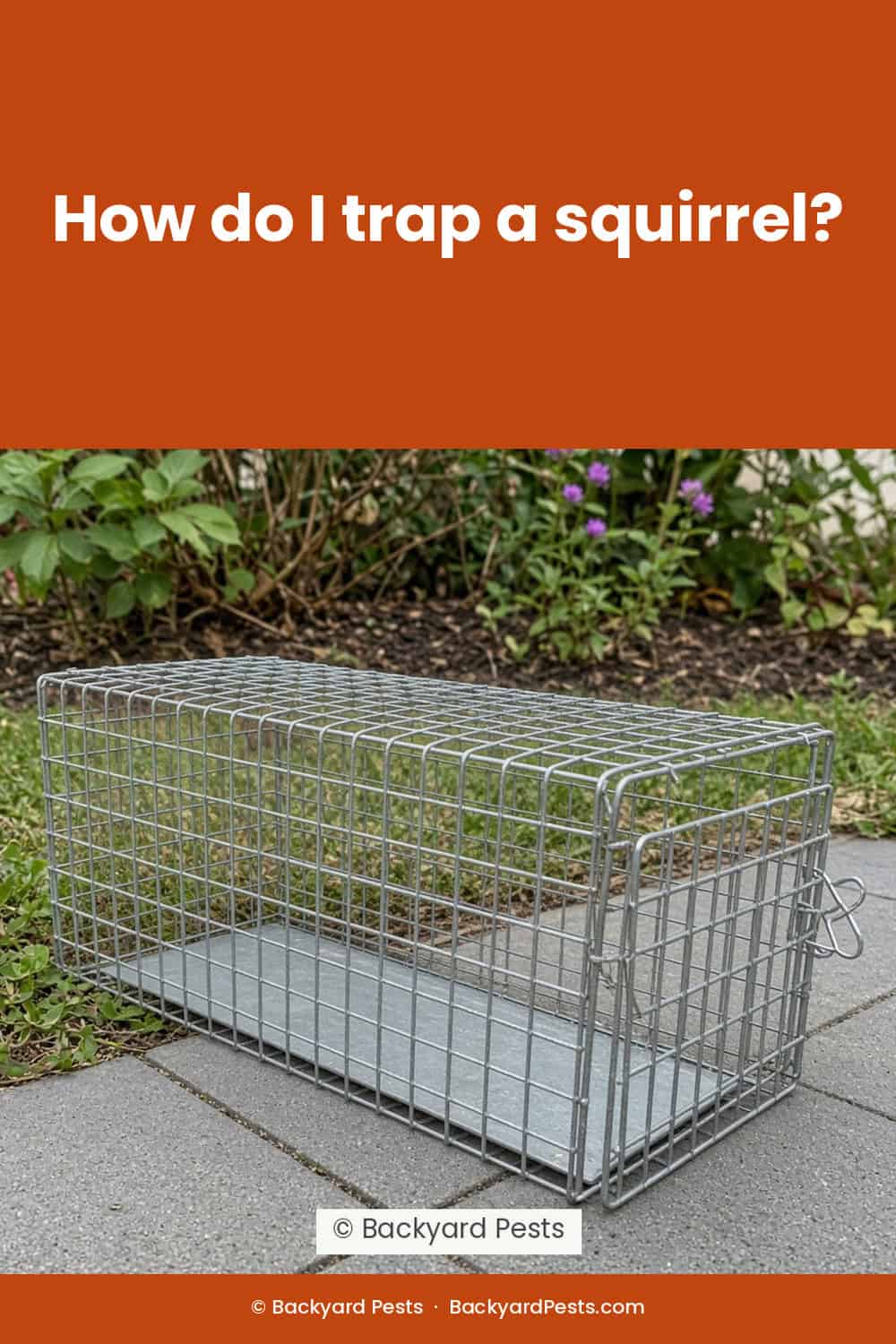
Should I trap a squirrel, or use a one-way door instead?
For a squirrel in the attic, walls, or roof, start with exclusion. Fit a one-way door on the main exit, wait until they’re out, then seal the holes with metal. That method is in how to get rid of squirrels in the house and in how to get squirrels out of the attic. You don’t have to handle the animal, and you don’t have to guess what the law says about release.
Trapping is more useful when exclusion isn’t practical, or when a squirrel is already confined somewhere you can set a cage safely. It is a poor first move in a vegetable garden on its own, because the tomatoes are still there for the next squirrel. Fix the attractant too, as in how to keep squirrels out of your garden.
Is it legal to trap or relocate squirrels?
It depends on your state, and sometimes on the species. This is not legal advice, but the pattern is consistent enough to take seriously: many states regulate taking, moving, or killing squirrels, even on your own property. Florida, for example, allows cage-trapping of some nuisance squirrels under its rules, requires traps to be checked at least once every 24 hours, and limits what you may do with a captured animal — including where, or whether, it can be released. Some fox squirrels and, in many places, flying squirrels have extra protections. A Big Cypress fox squirrel in Florida may not be taken as nuisance wildlife without the proper permit.
Before you set a trap, check your state wildlife agency, or hire a licensed wildlife control operator who already works under those rules. Don’t assume you can drive a trapped squirrel to a park in the next county and let it go. That’s the step that gets people into trouble, and it’s hard on the animal too.
What is the best trap, and what bait should I use?
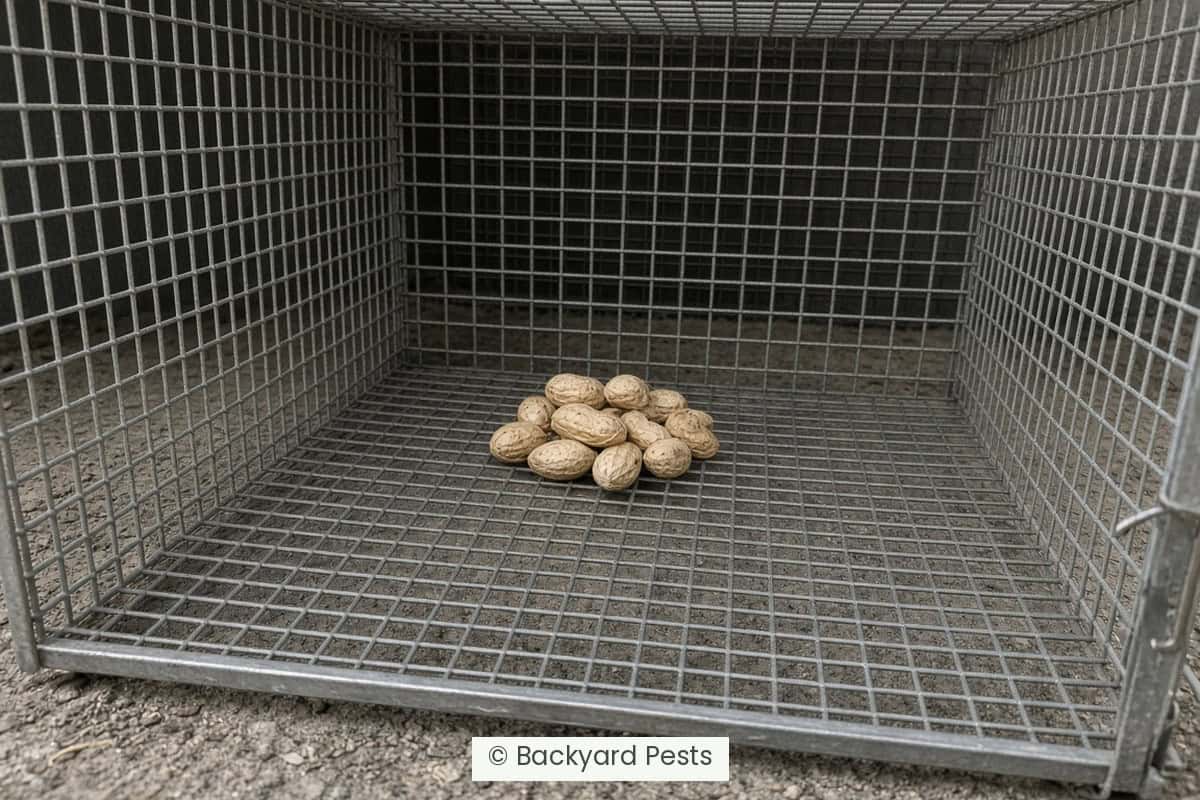
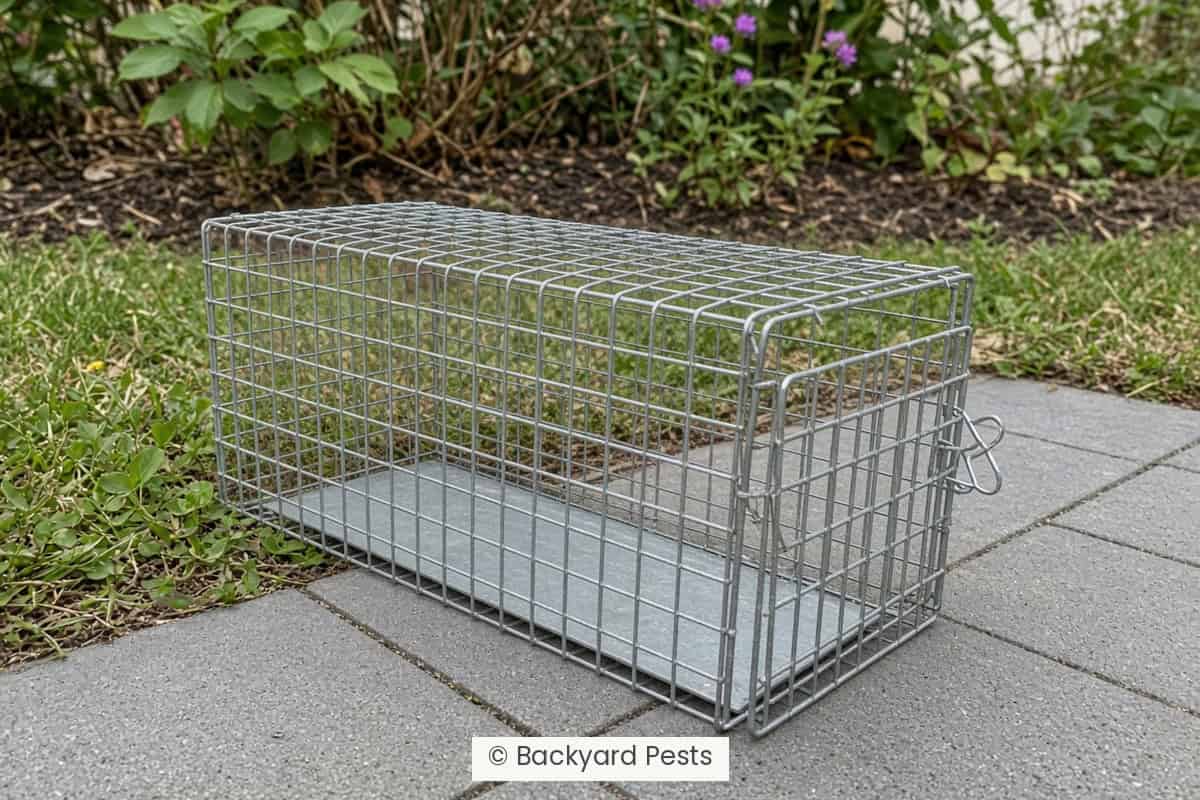
Use a squirrel-sized live cage, not a mouse trap. A gray squirrel needs a much larger box than a 10-inch mouse cage. A 32-inch live animal cage trap is in the right size range for tree squirrels and similar animals. Follow the trap’s instructions, set it on a level surface, and keep it in the shade so a caught squirrel isn’t sitting in the sun.
Bait with what they already want: peanuts in the shell, sunflower seed, or a little peanut butter smeared at the back of the cage so the squirrel has to step on the trigger plate. There’s a longer list of foods squirrels like to eat if one bait is being ignored. Wear work gloves when you handle the trap, and don’t stick your fingers through the wire.
Check the trap often — at least as often as your state requires, and more often in heat or cold. A forgotten trap is cruel, and in some states it’s also a violation. If you catch a non-target animal, the usual rule is to release it on the spot, but follow your local regulations.
What if the trap isn’t catching anything?
The trap may be in the wrong place, or the bait may be less interesting than the bird feeder ten feet away. Put the cage along a run you already see — at the base of the tree they climb, near the attic hole (only if that’s legal and safe), or beside the garden bed they’re raiding. Wedge or cover the top lightly so the trap feels less exposed, without blocking the door. Take the competing food away.
And look again at exclusion. A squirrel that can still walk in and out of a soffit hole has little reason to walk into a box.
Should I use poison instead of a trap?
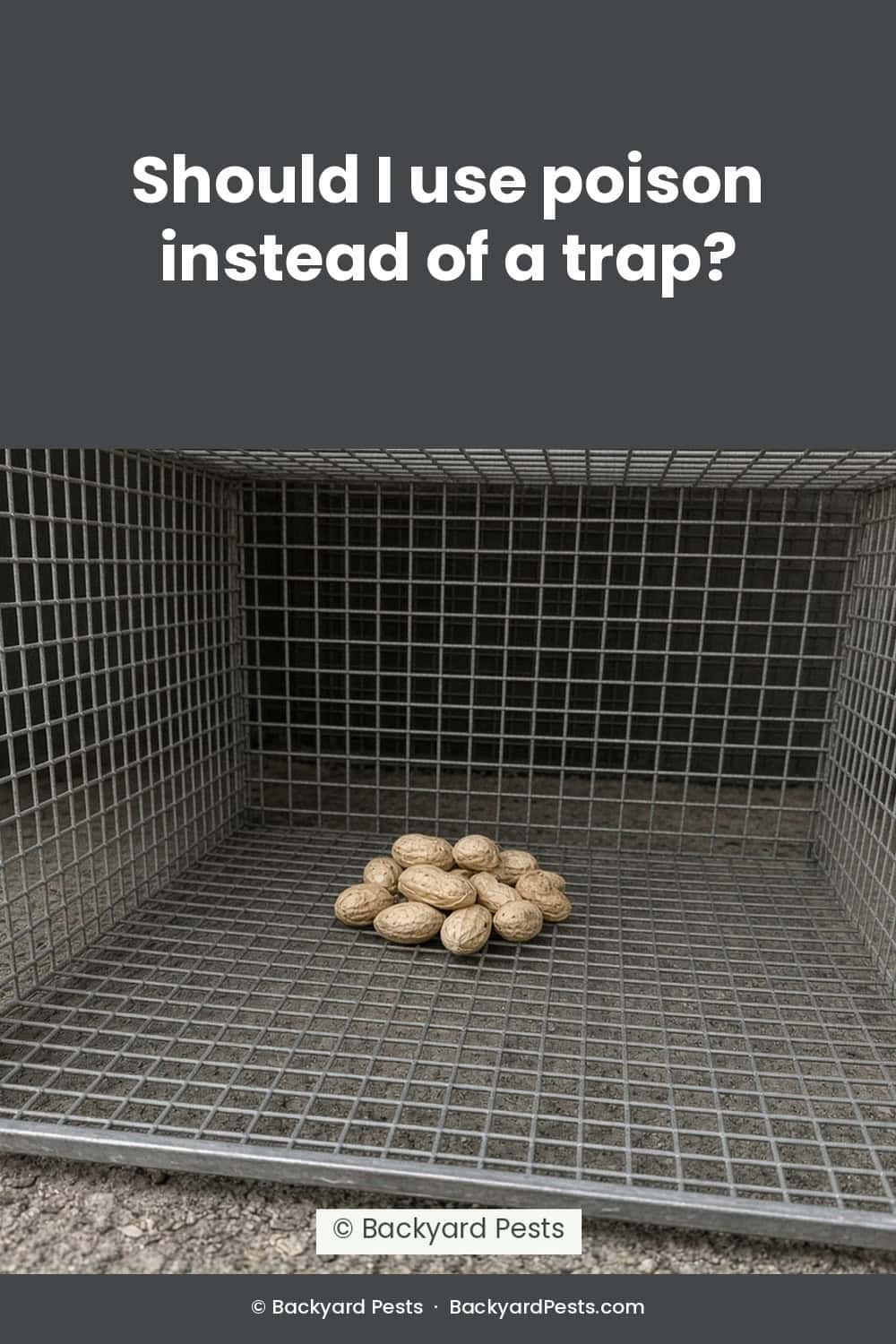
No. I wouldn’t. Many rodent baits are not labeled for squirrels, a poisoned squirrel may die in a wall or where a pet or owl can find it, and poison doesn’t close the hole. If you want them out of the house, evict and seal. If you want them out of the tomatoes, cover the plants. A cage trap, used legally and checked often, is the more honest of the two “catch” options — and for a house, a one-way door is still better than both.
Save this for later: pin this post so the legal check and the trap size are here before you buy a cage.
Sources:
Florida Fish and Wildlife Conservation Commission, Living with Squirrels
University of California Statewide IPM Program, Tree Squirrels
Virginia Department of Wildlife Resources, Problems with Squirrels
Wildlife Center of Virginia, Squirrels as Neighbors