Quick note: this post is written for Northern Hemisphere/US late summer and fall timing (roughly August–November). If you’re south of the equator, just shift everything about 6 months.
Noticing more spiders around your house, even though you keep the doors and windows shut?
Most spiders you see in your home in late summer and in fall were already living inside — they’re not coming in from outside to escape the weather. The spiders are just more visible now because it’s mating season, when adult male spiders leave their hiding spots to wander the house looking for a female.
Sealing the house alone won’t clear out all the spiders, since they were never outside to begin with. Here’s what to do about spiders inside the home, and how to tell whether what you’re finding is even a spider worth worrying about.
Do spiders come inside in fall?
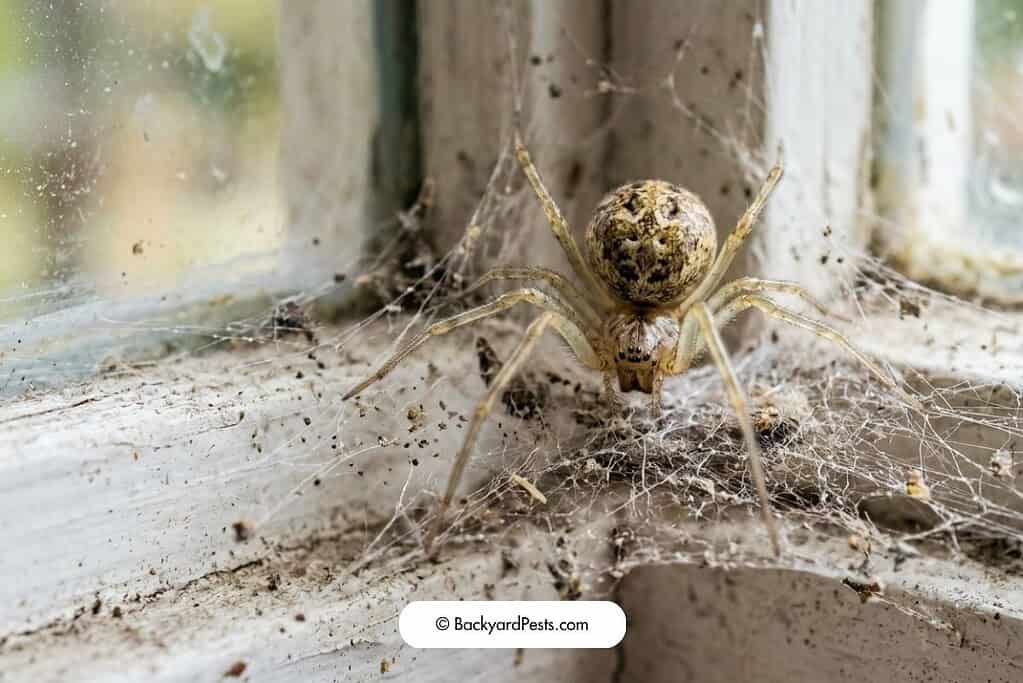
Less than 5% of the spiders found indoors have ever set foot outside.[1] The spiders living in your home belong to a small group of species adapted to indoor life: steady temperature, limited food, and little water. Some of these species have been living indoors since the days of the Roman Empire, roughly 2,000 years, and are rarely found outside even in their native regions.[1] They’re not refugees from your yard; they’re residents.
Outdoor spiders that wander in through an open door usually don’t survive long and don’t reproduce indoors because the environment doesn’t suit them. So the fall “invasion” isn’t outdoor spiders moving in. It’s indoor spiders becoming visible.
Why you are seeing so many spiders in your house
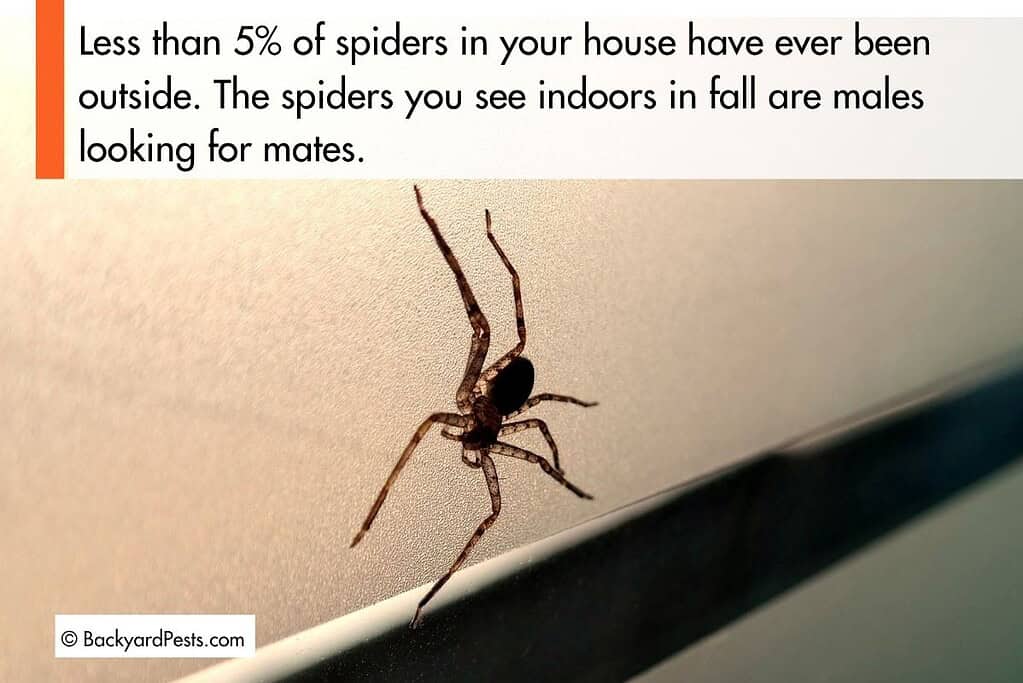
Late summer and fall are mating season for the spiders living in your walls. This is when adult male spiders come out searching for females. Females and young spiders tend to stay hidden in their webs, wall voids, closets, and storage boxes — they’re not the ones you’re seeing around.
Spiders are cold-blooded, so temperature doesn’t make them “uncomfortable” the way it does for us — they just get less active as it drops, then dormant. Most temperate-zone house spiders also carry natural antifreeze that lets them survive below freezing temperatures.[1] There’s no reason for spiders to seek out your heater.
The timing actually lines up with mating season, not the first cold snap, which is exactly why sealing the house before it gets cold doesn’t stop this.
Do spiders come inside when it rains?
Some spiders do come inside when it rains. Wolf spiders and other ground-dwelling species build burrows for shelter, and heavy rain can flood or damage them, pushing spiders to wander in search of drier ground — sometimes toward buildings.[2] These are genuinely outdoor spiders escaping a real problem outside, unlike the indoor species covered in the rest of this post. Spiders seen in the home in dry fall weather are most often full-time indoor spiders seeking a mate. (Full guide to spiders and rain — coming soon.)
Are the spiders in my house dangerous?
The overwhelming majority of spiders you’ll find indoors in North America are harmless — common house spiders, cellar spiders, and similar species that pose no real threat to people.
Two species are worth knowing how to identify: the black widow (shiny black body, red hourglass marking on the underside) and the brown recluse (light brown, violin-shaped marking on the back, found mainly in the central and southern US).
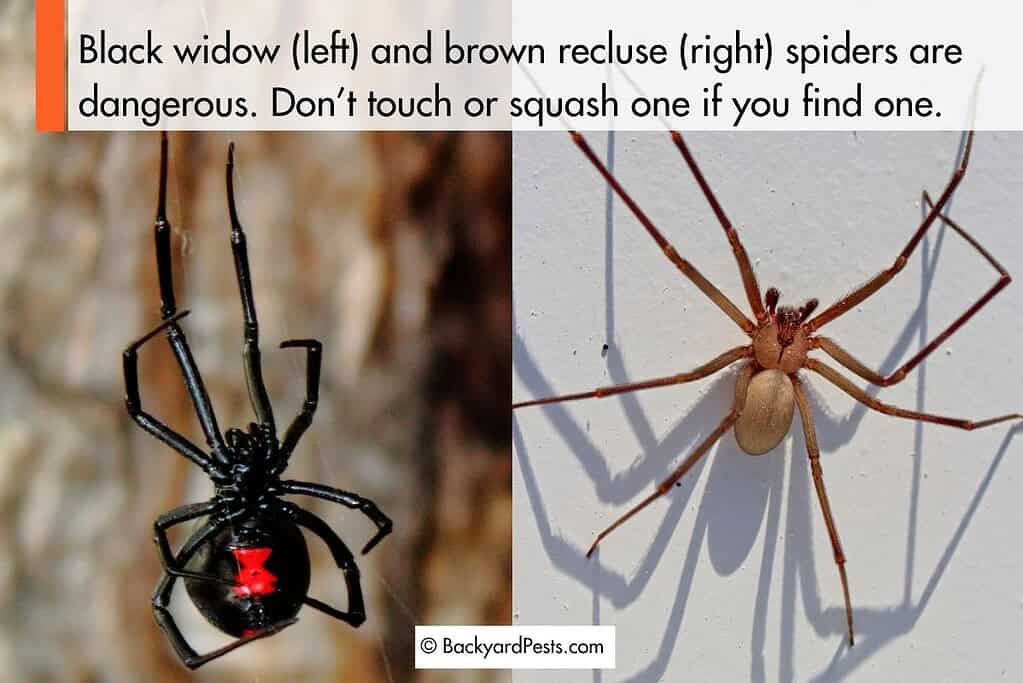
If you find either one, don’t try to handle it or squash it with your bare hands — both bite defensively when pressed against skin, which is how most bites actually happen (inside a shoe, a glove, or a box being moved). Capture it in a jar or container without touching it, and either release it well away from the house or contact a pest control professional. A single sighting isn’t necessarily an infestation, but repeated sightings in the same area are worth having checked out.
If you’re not sure what spider you’re looking at, treat any bite with swelling, spreading pain, or a fever as a reason to see a doctor rather than self-diagnosing from a photo.
How to get rid of spiders in your house
Sealing up the house alone won’t clear spiders out, since they’re already living there rather than sneaking in. It’s best to deal with the spiders already living there, then make the house harder for the next generation of spiders to move into.
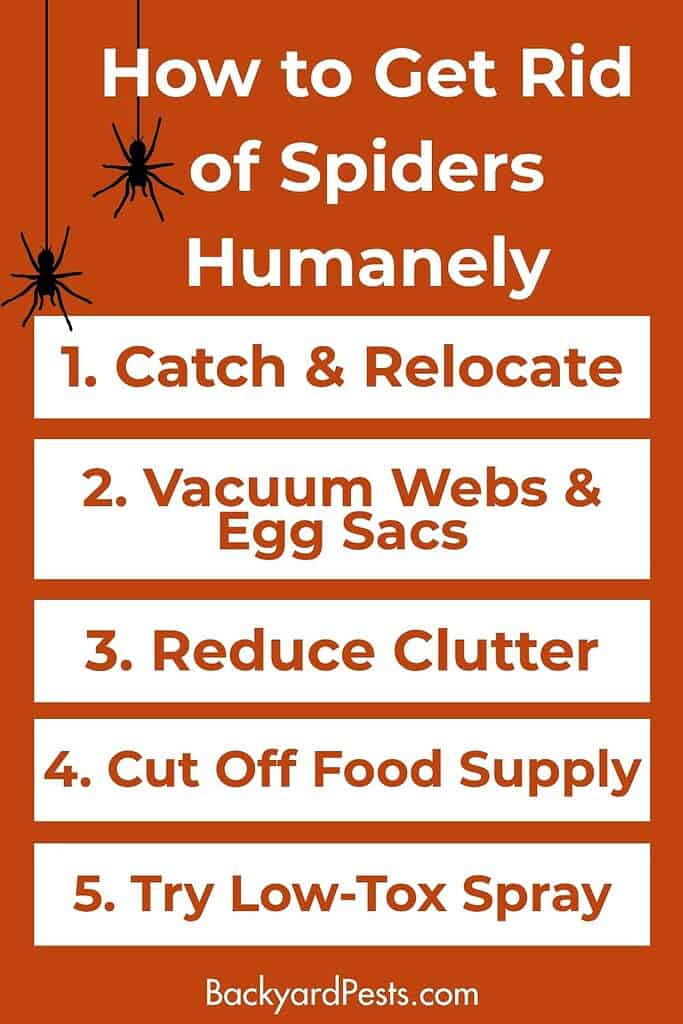
Here’s how to get rid of spiders living in your house, starting with the most humane options:
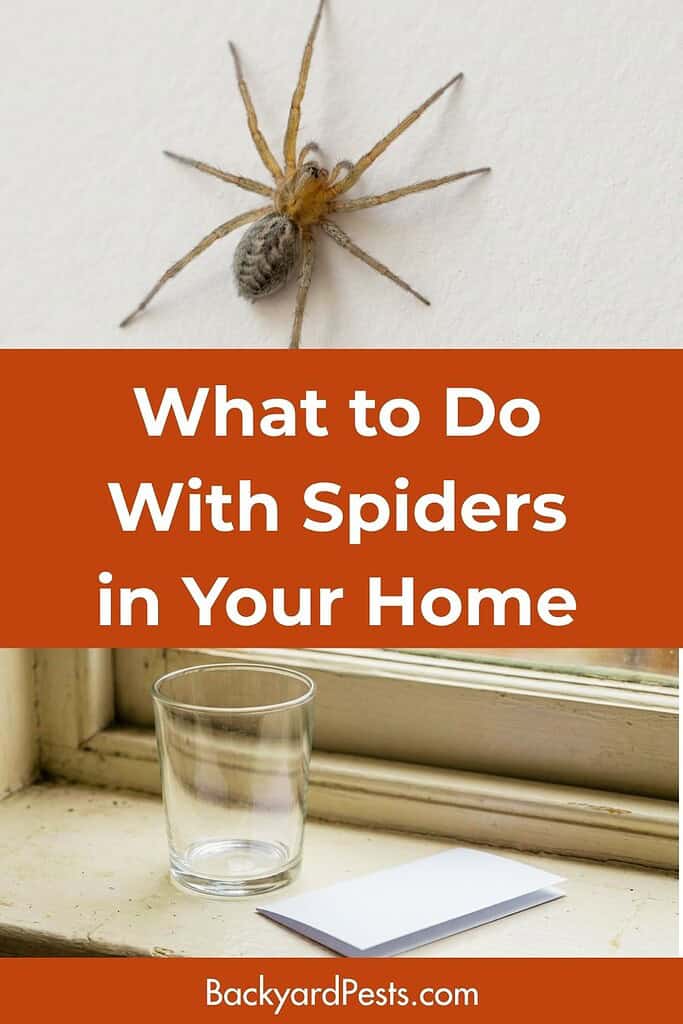
- Catch and relocate live spiders to an enclosed, out-of-the-way indoor spot — a cup and a sturdy piece of paper works well to carry them. For a no-touch option, a BugZooka or slide-closure bug catcher makes catch-and-relocate easy without touching the spider.
Try not to release house spiders outdoors: many are obligate indoor species that can die within days outside.[3] The relocation spot matters too — cold itself isn’t the main risk, since house spiders carry a natural antifreeze that handles low temperatures. The bigger risk is dryness: a heated basement or an insulated garage that holds some humidity works, but a bone-dry, drafty space like an uninsulated shed can dehydrate them just as fast as being put outside.If you don’t have anywhere suitable to relocate a spider to, releasing it outside isn’t a guaranteed death sentence — its odds are better in mild, humid weather near the foundation than in the middle of winter, just lower than staying indoors. Vacuuming (see below) is also a reasonable fallback if relocating isn’t practical for you.
- Vacuum up empty webs and egg sacs — corners, window frames, behind furniture, basements, and garages are the usual spots. Egg sacs matter as much as live spiders as each one can hold dozens to hundreds of future spiders.
- Reduce clutter in storage areas. Boxes, stacked firewood, and rarely-disturbed corners are prime real estate for spiders that live indoors long-term. Less undisturbed space means fewer places for them to set up.
- Cut down on spiders’ food supply. Spiders stick around where there are other bugs to eat, so dealing with any existing insect problem naturally reduces the spider population too.
- Try a low-tox repellent spray. If you don’t have pets, peppermint essential oil is one of the few natural repellents with real research behind it — a 2018 university study found it strongly repelled two of the three spider species tested (a third showed little response), so it’s promising but not universal.[4] Mix 10-15 drops of peppermint oil with a splash of dish soap and water in a spray bottle, and apply weekly to baseboards, window sills, door frames, and corners. Tea tree or eucalyptus oil are sometimes recommended too, though they haven’t been tested the same way. Essential oils, including peppermint, can be toxic to pets — especially cats. If you have pets, skip this method or check with your vet for advice. A ready-made cedar-oil or peppermint-oil spray works the same way if you’d rather buy one than mix it yourself. (Full guide to natural spider deterrent sprays — coming soon.)
- Keep a traditional insecticide spray on hand as a last resort only. Spraying insecticides around doors and windows doesn’t address spiders that were never coming from outside, and most common house spiders aren’t dangerous enough to justify it as a first move. If you do want one on hand for something like a black widow or brown recluse sighting, spot-treat entry points and hiding spots — baseboards, window sills, door frames, cracks — rather than spraying the whole room. Ventilate the area while spraying, keep kids and pets out until it’s fully dry, and follow the label’s instructions exactly.
Save this for next fall: pin this so you’ve got the real explanation ready next time someone in your house asks “why are there so many spiders right now.”
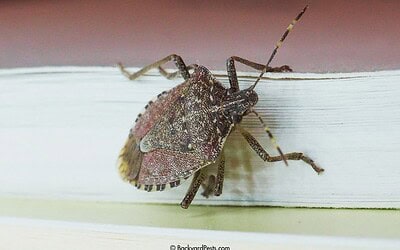
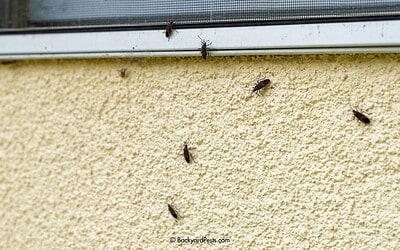
Related reading: Why Are There So Many Ladybugs on My House? (They’re Probably Boxelder Bugs) and Stink Bugs in the House in Fall — two more fall “invaders” with their own explanations. Also see our full guide to why bugs invade your house in fall, and next up in this series: cluster flies.
Sources:
[1] Burke Museum, “Spider Myths: In from the Cold”
[2] UC ANR (University of California Agriculture and Natural Resources), “Who’s Afraid of the Big Bad ‘Wolf Spider’?”
[3] Vrenozi & Henriques, “Thermal preferences of two spider species”, 2021
[4] Fischer, A., Ayasse, M., & Andrade, M.C.B. (2018), “Natural Compounds as Spider Repellents: Fact or Myth?”, Journal of Economic Entomology, 111(1), 314–318