Quick note: this post is written for Northern Hemisphere/US fall timing (roughly September-November). If you’re south of the equator, just shift everything about 6 months.
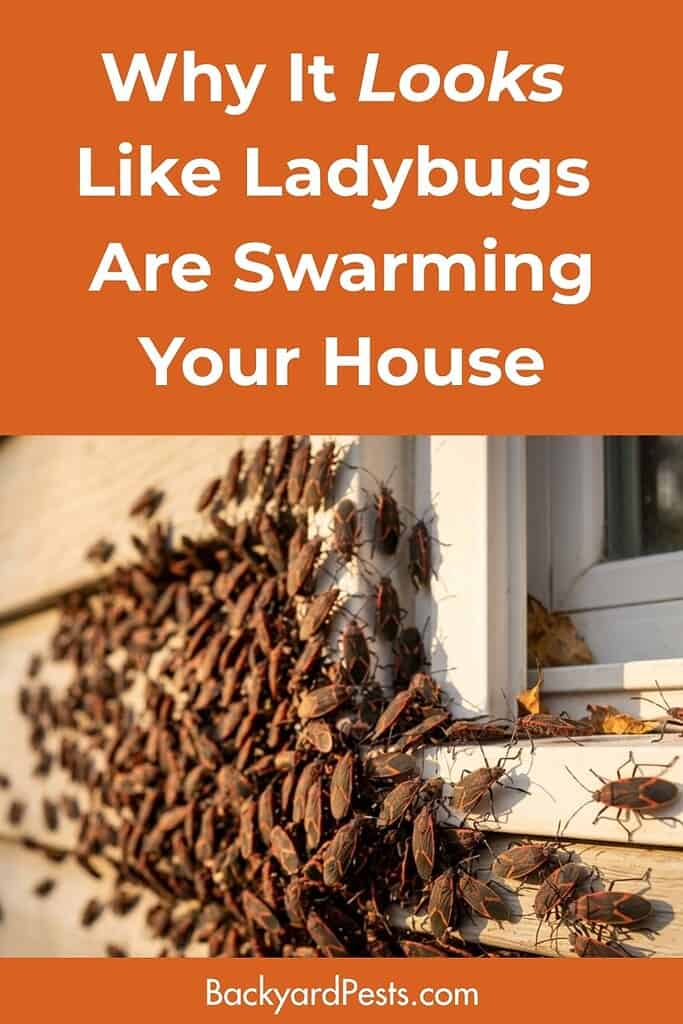
If it’s fall and you’ve got a wall covered in little red-and-black bugs that you’re calling ladybugs, you’re almost certainly dealing with boxelder bugs instead – and yes, you can get rid of them. The fastest fix is a shop vac or a bucket of soapy water for the ones already inside, combined with sealing up the cracks they’re using to get in – do both, and you’ll stop the problem instead of just resetting it every day.
Here’s how to tell what you’re actually looking at, how to handle the ones inside your house right now, and how to keep next fall’s swarm from showing up at all.
Wait – are these actually ladybugs?
Probably not. True ladybugs are round, domed, and usually solid red or orange with black spots – they don’t swarm your house in big numbers.
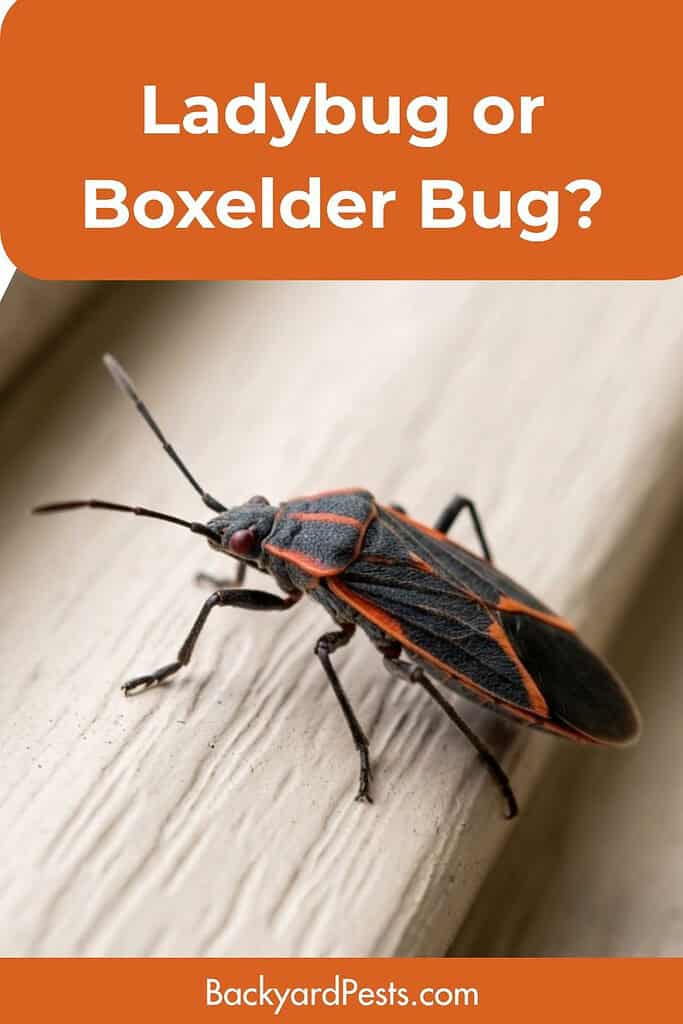
What most people are seeing in a fall house-swarm is one of two look-alikes: Asian lady beetles (which really are ladybug relatives, just more likely to invade in large numbers) or boxelder bugs (which aren’t ladybugs at all – they’re a completely different insect with a narrow, elongated black body and red-orange markings along the edges, not spots).
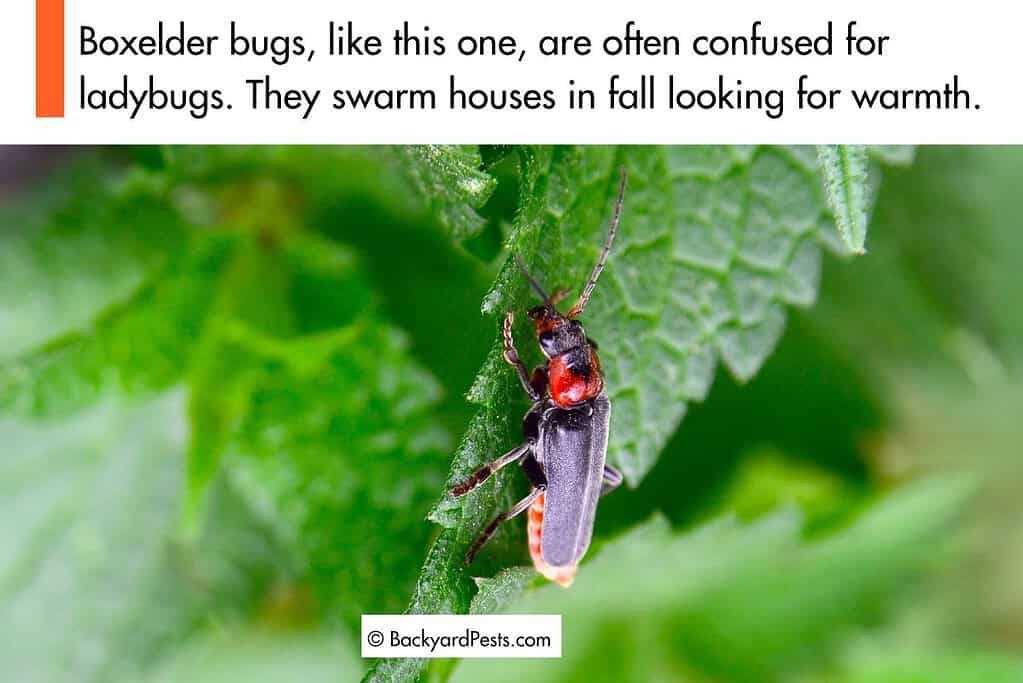
If your “ladybugs” are long and narrow rather than round, and clustered by the dozens or hundreds on one sunny wall, you’ve got boxelder bugs – the rest of this post is about them.
Boxelder bugs vs. other fall invaders: quick comparison
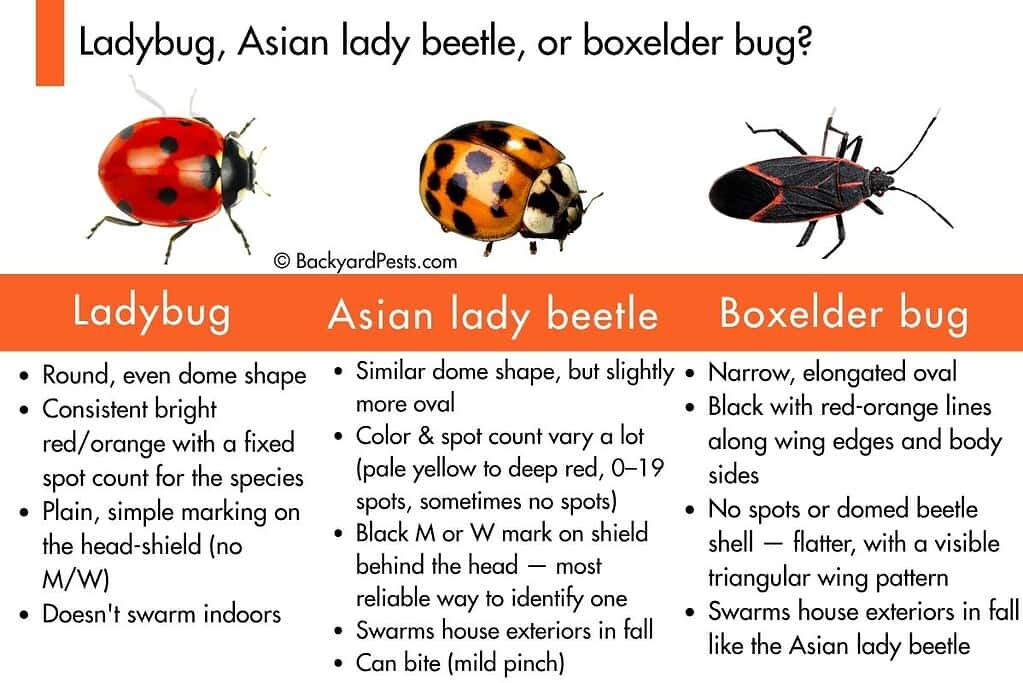
Still not 100% sure which of the three you’re looking at? Here’s the fast side-by-side — check the shape and the markings, and you’ll know in ten seconds.
| True Ladybug | Asian Lady Beetle | Boxelder Bug | |
|---|---|---|---|
| Shape | Round, evenly domed | Round to oval, domed | Narrow, flat, elongated |
| Color/pattern | Fixed spot count for the species | Wildly variable — 0 to 19 spots, pale yellow to deep red | Black with red-orange lines on the edges, not spots |
| Key tell | Plain marking behind the head | Black M or W-shaped marking behind the head | No dome at all — doesn’t look like a beetle |
| Swarms your house in fall? | No | Yes | Yes |
| Bite risk | None | Mild pinch | None |
Ladybug vs. Asian lady beetle vs. boxelder bug
Boxelder bugs aren’t the only fall bug that swarms house exteriors. Two others get mistaken for them:
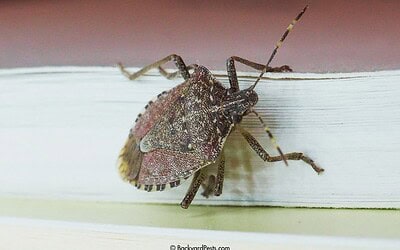
Stink bugs have a shield-shaped body — wide and angular, like a tiny armored badge, not the narrow oval shape of a boxelder bug. They’re mottled brown all over, not black with red-orange edges. And if you accidentally squish one, you’ll know immediately: stink bugs release a much sharper, stronger smell than a boxelder bug’s mild odor.
Cluster flies aren’t bugs at all — they’re actual flies. They’re slow-moving and dark gray to black, with none of the red-orange coloring boxelder bugs have. They also tend to show up inside attics and wall voids rather than clustering on sunny outside walls the way boxelder bugs do.
Why are boxelder bugs all over my house in fall?
Boxelder bugs aren’t trying to invade your home to eat your food or nest in your walls – they’re looking for somewhere warm to survive winter. As temperatures drop, boxelder bugs cluster on sun-warmed, south- and west-facing walls (that’s why you’ll often see them piled up on one side of the house and nowhere else), then squeeze through any gap they can find – window frames, siding cracks, gaps around utility pipes – to get into wall voids, attics, and eventually your living space.
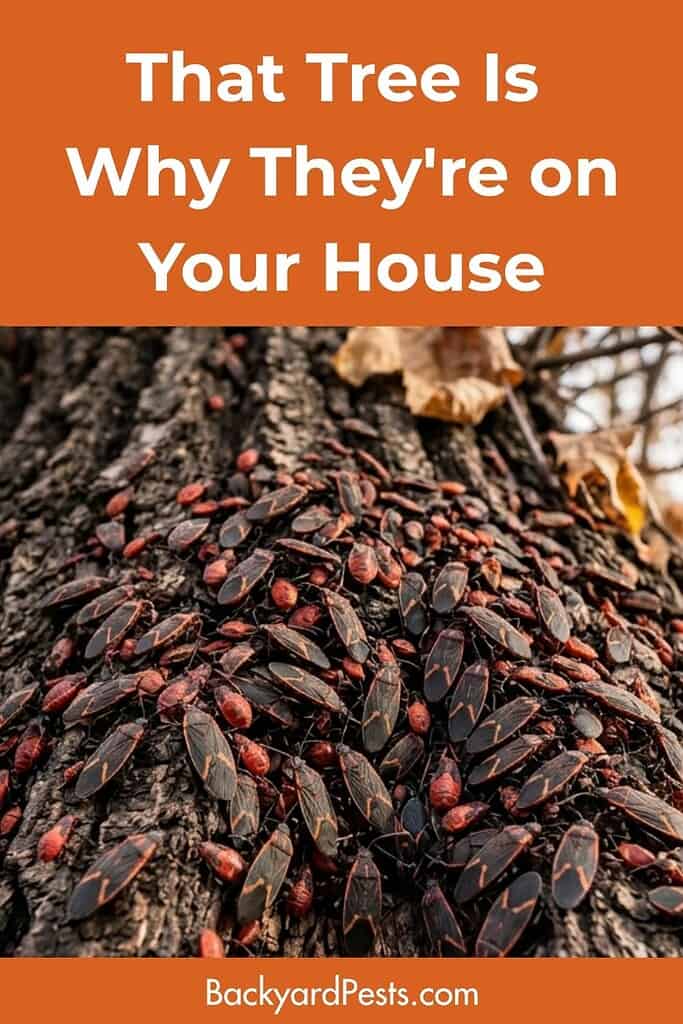
They’re drawn specifically to boxelder trees, ash trees, and maple trees, where they feed and breed all summer. If you’ve got one of those trees near your house, you’re a prime target for a fall swarm.
How to get rid of boxelder bugs already inside your house
Boxelder bugs inside your house need to be removed, not killed with a spray – squishing or spraying them can stain walls and fabric with their body fluid, and a dead pile of bugs attracts other pests like carpet beetles.
Here’s the order to work through to get rid of boxelder bugs:
- Vacuum them up. A shop vac or regular vacuum with a disposable bag works best – empty the bag outside right after, since boxelder bugs can survive inside a vacuum for a while.
- Use soapy water for a spot cleanup. A few drops of dish soap in a spray bottle of water kills boxelder bugs on contact without staining anything – good for window sills and small clusters.
- Skip the insecticide indoors. Boxelder bugs don’t damage your home or bite, so spraying pesticide inside just adds chemicals to your living space for a problem a vacuum already solves.
- Check your window and door screens. If bugs keep reappearing in the same room, that’s usually where they’re getting in – inspect screens and frames in that specific room first.
How to stop boxelder bugs from getting inside in the first place
Getting rid of the boxelder bugs already inside is only half the job – if you don’t seal up how they got in, next week’s warm afternoon brings a fresh batch. Boxelder bugs are persistent about reusing the same entry points, so:
- Caulk cracks and gaps around windows, doors, siding, and utility pipe entries – this is the single most effective long-term fix.
- Repair or replace damaged window screens and door sweeps. Consider using door seal strips to close gaps.
- Seal gaps around the foundation where siding meets the ground.
- Trim back tree branches touching the house, since branches act as a bridge straight to your siding.
- Consider treating the trunk of a nearby boxelder, ash, or maple tree with an exterior insecticide in late summer, before bugs start migrating toward the house – this is the one situation where a professional treatment timed early actually prevents the fall swarm rather than just responding to it.
Do boxelder bugs cause any damage?
No – boxelder bugs don’t bite, don’t sting, don’t damage wood or fabric, and don’t reproduce indoors. They’re a nuisance pest, not a structural or health threat.
The only real “damage” is the mess if you squish them, since their body fluid can stain light-colored surfaces. That’s genuinely good news if you’re dealing with a big cluster and feeling overwhelmed – this is a cleanup and prevention problem, not an infestation problem.
Save this for next fall: pin this so you’ve got the fix ready before the next swarm shows up.
Related reading: Where Do Flies Go in Winter? and Do Bed Bugs Hibernate? – more on how fall and winter change what’s happening with pests around your house. Also see our full guide to why bugs invade your house in fall (coming soon), and next up in this series: stink bugs, spiders, and cluster flies (coming soon).
Sources: Colorado State University Extension, “Boxelder Bugs” (extension.colostate.edu/resource/boxelder-bugs); PestWorld (National Pest Management Association), “Boxelder Bugs: Bites, Infestations & Prevention” (pestworld.org/pest-guide/occasional-invaders/boxelder-bugs).