Quick note: this post is written for Northern Hemisphere/US fall timing (roughly September–November). If you’re south of the equator, just shift everything about 6 months.
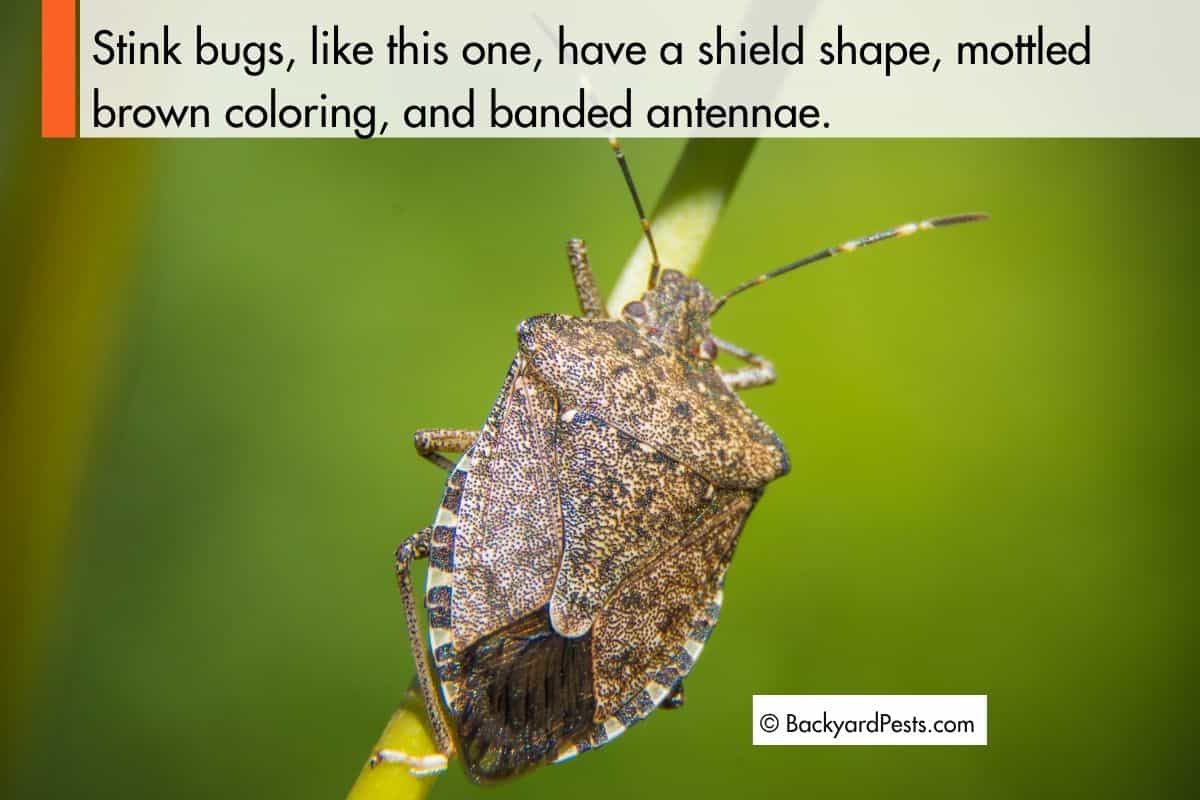
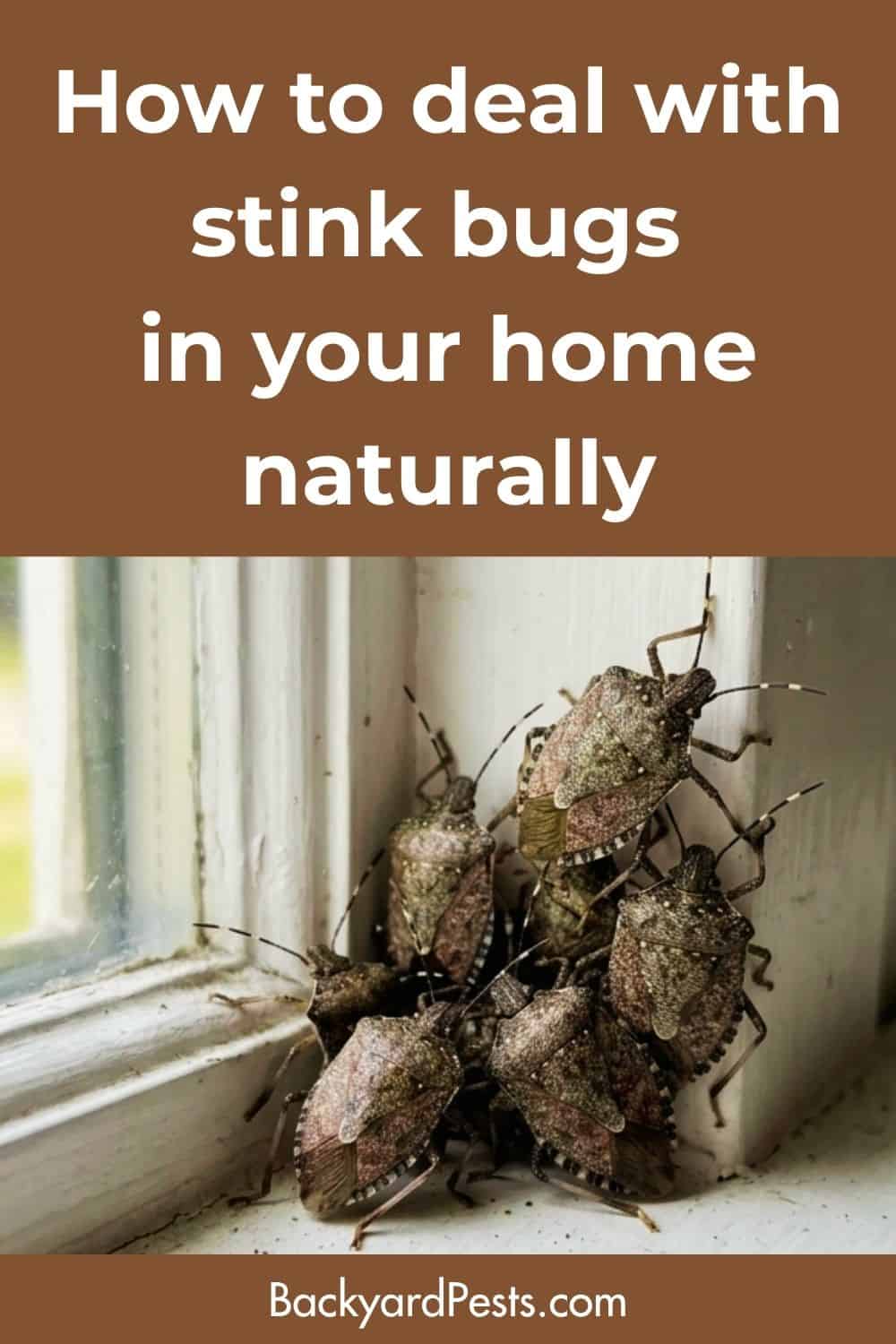
Are you finding shield-shaped brown bugs on your windowsills, curtains, or ceiling this fall? Those are brown marmorated stink bugs looking for somewhere to spend this winter — and yes, you can stop them without hurting them.
To get rid of stink bugs in the house, don’t ever squish them. Start with the mesh-over-the-vacuum trick or hand-catching what’s already inside (more details below), then seal up cracks around windows, doors, and siding so you don’t get a fresh batch on the next warm afternoon.
Here’s exactly how to handle the stink bugs you’ve got and stop the rest from showing up.
Why are stink bugs in my house in fall?
Stink bugs aren’t coming into your home in fall to eat, breed, or nest — they’re doing the same thing boxelder bugs and cluster flies are doing: looking for somewhere protected to survive winter. [1]
As temperatures start dropping, adult stink bugs move toward buildings and squeeze in through cracks around windows and door trim, gaps behind baseboards, and openings around exhaust fans and ceiling light fixtures.
Once in a building, stink bugs tuck into wall voids and attics and mostly stay there until a warm day — or your heating system — wakes them up and sends a few wandering into your living space.
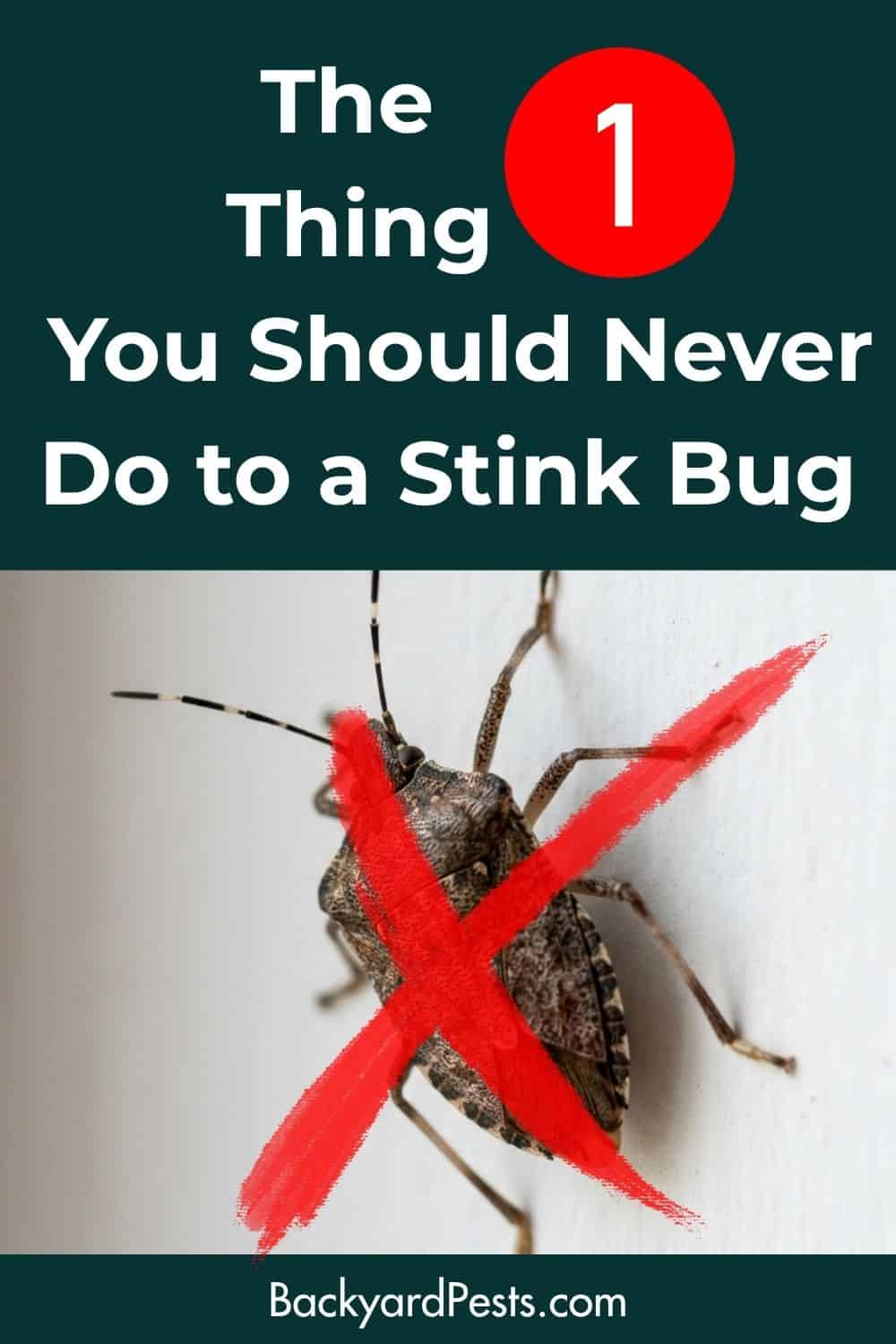
Whatever you do, don’t squish stink bugs
Never squish a stink bug or vacuum one carelessly. Doing either releases a strong, unpleasant smell as a defense response — this is the smell that gave stink bugs their name!
Here’s how to remove stink bugs from your house in fall without any smell:
- Trap and release. Put a jar or cup over the stink bug, then slowly slide a thick piece of paper under it. Flip it over, and take the stink bug outside to be released.
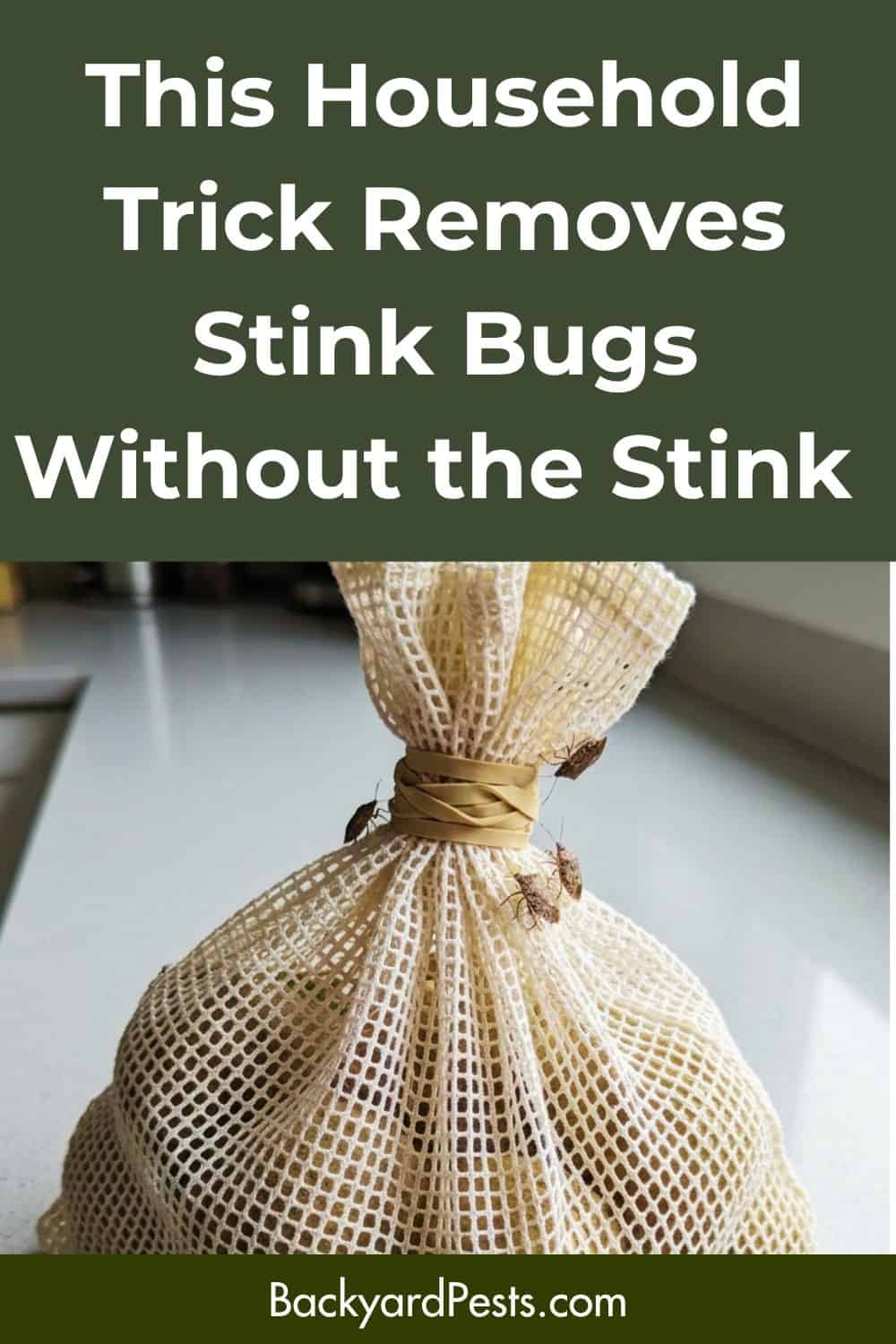
- Mesh over the vacuum hose. Stretch a mesh produce bag, thin sock, or old stocking over the vacuum hose nozzle, and secure it with a rubber band. Turn on the vacuum, and use the suction to pin the stink bug against the outside of the mesh rather than trapping it inside the machine. Switch off the vacuum, knock the bug into a jar or bucket, and carry it outside to be released.
- Or skip the DIY setup entirely. If you want a no-touch bug catching option that’s chemical-free and won’t hurt insects you want to catch and release, invest in a BugZooka or this slide-closure bug catcher from Amazon — totally worth it if stink bugs and other bugs are a regular problem rather than a once-in-a-while catch.
How far away should you release a stink bug?
There’s no research-backed number for how far away to release a stink bug so it doesn’t come back inside — a stink bug released right at your door will likely just look for a way back in, since it’s actively hunting for winter shelter. Carry a stink bug well away from the house (the far end of the yard, past the garden if possible) before letting it go.
The real fix isn’t distance, though — it’s the sealing checklist below. A released bug that finds a sealed house can’t get back in no matter how close you put it down.
Should I spray insecticide indoors to kill stink bugs?
Stink bugs don’t bite, sting, or damage your home. There’s no infestation to treat — just bugs to remove and gaps to seal. [1]
Don’t spray indoor stink bugs with insecticide as spraying can backfire. Dead stink bugs behind a wall attract carpet beetles and other pests that feed on dead insects.
Foggers don’t help with stink bugs either. They only kill what the spray touches, not what’s still coming in.
How to stop stink bugs from getting inside in fall
Manually removing the stink bugs inside only buys you time until the next warm afternoon or the next time you turn your heating on. Sealing the entry points is what actually stops the cycle of stink bugs getting into your home.
Stink bugs are strong fliers, and they tend to gather on warm, high surfaces — not just ground-floor walls. That’s why the checklist below covers upper stories too, not only the entry points at eye level.
Do this as early as summer if you can — but if it’s already fall, don’t skip it. Sealing now still slows down the bugs already showing up and stops next year’s swarm before it starts: [1] [2]
- Caulk cracks and gaps around windows, doors, siding, utility pipe entries, chimneys, and fascia boards under the roofline. This is the single biggest fix.
- Add or repair weather stripping around doors and windows.
- Repair damaged window and door screens. Remove window air conditioners for the season if you can — they’re a known gap.
- Check exhaust fans and ceiling light fixtures, especially in upper rooms. Stink bugs use these more than people expect.
- Check second-story windows, dormers, and rooflines, not just ground level — stink bugs fly and often gather up high before working their way in.
- Trim vegetation touching the house. Branches, shrubs, and vines all act as a bridge onto your siding.
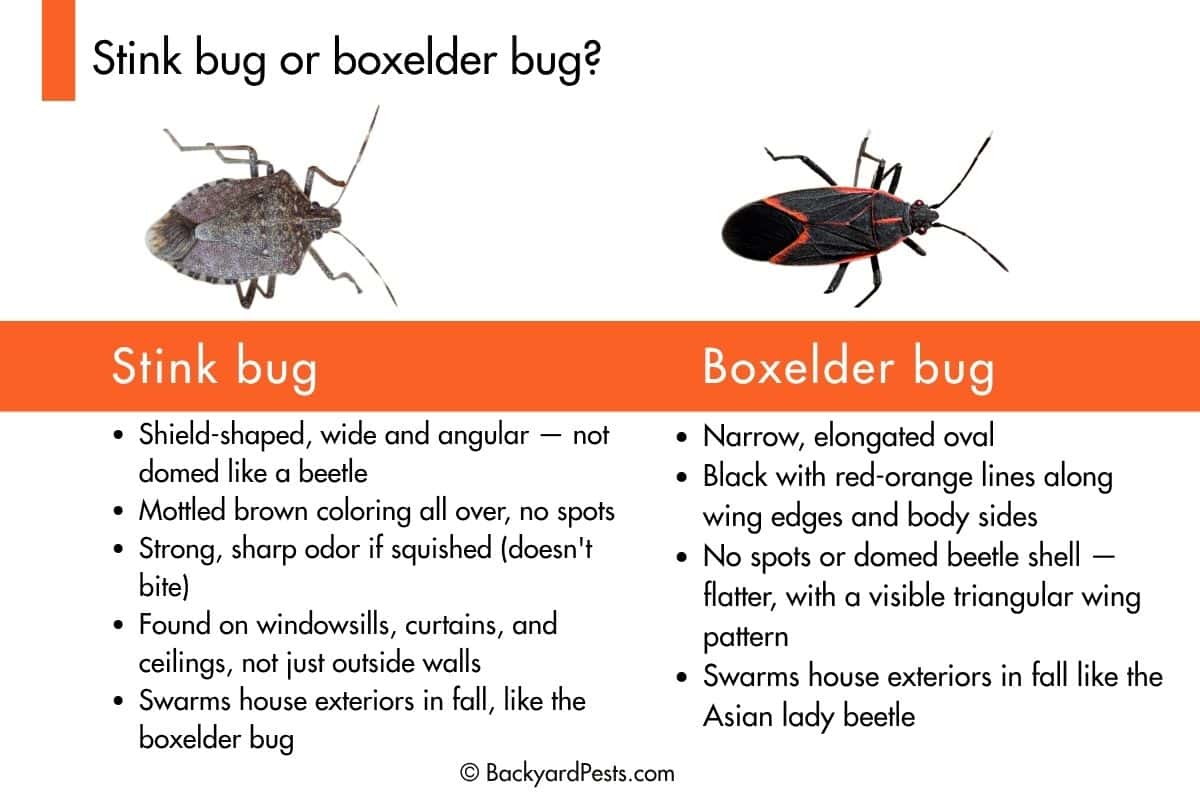
How to tell the difference between a stink bug and a boxelder bug
Both stink bugs and boxelder bugs show up on sunny walls in fall. Both are harmless. But it’s easy to mix up the two.
Here’s a quick side-by-side so you can tell a stink bug and a boxelder bug apart:
| Stink Bug | Boxelder Bug | |
|---|---|---|
| Shape | Shield-shaped, wide and angular | Narrow, flat, elongated |
| Color | Mottled brown all over | Black with red-orange lines on the edges |
| If squished | Strong, sharp odor | Mild odor, mostly just a stain |
| Where you’ll find them | Windowsills, curtains, ceilings | Sunny south/west-facing walls |
Do stink bugs cause any damage indoors?
Stink bugs don’t cause any damage indoors. [1] They don’t bite, sting, suck blood, or spread disease, so there’s no health risk.
Stink bugs won’t touch your food or belongings. They don’t eat or breed indoors at all, so there’s no reason for one to get into stored food. And unlike moths or termites, they don’t chew through fabric or bore into wood — a stink bug on your curtains isn’t going to damage them.
Outdoors, stink bugs can be a real problem for crops. Indoors, they’re just a nuisance.
The smell is the worst part of being around a stink bug, and that’s totally avoidable if you handle them right.
Save this for next fall: pin this so the fix is ready before the next batch shows up on your windowsill.
Related reading: Why Are There So Many Ladybugs on My House? (They’re Probably Boxelder Bugs) — same fall swarm behavior, different bug. Also see our full guide to why bugs invade your house in fall, and next up in this series: spiders and cluster flies.
Sources:
[1] University of Maryland Extension, “Tips for Dealing With Brown Marmorated Stink Bugs”
[2] US EPA, “Brown Marmorated Stink Bug”