If you’ve got a squirrel in a live trap, or you’re about to buy one, you’re probably wondering whether it’s legal to trap or relocate squirrels — and the honest answer is not a single nationwide yes or no.
I looked at how state wildlife agencies handle this, and the details change enough that you shouldn’t copy a neighbor’s plan from another state.
Whether it’s legal to trap, relocate, or kill a squirrel depends on your US state, and sometimes on the species. Some states allow landowners to trap nuisance squirrels under specific rules; others restrict relocation, require permits, or protect certain squirrels entirely. Check your state wildlife agency before you set a trap or move an animal. This is general information, not legal advice.
Exclusion — a one-way door, then a metal seal — avoids a lot of this question, which is why I start there in how to get rid of squirrels in the house. If you still need a trap, here’s the legal picture and how to look up your own rules.
Can I trap a squirrel on my own property?
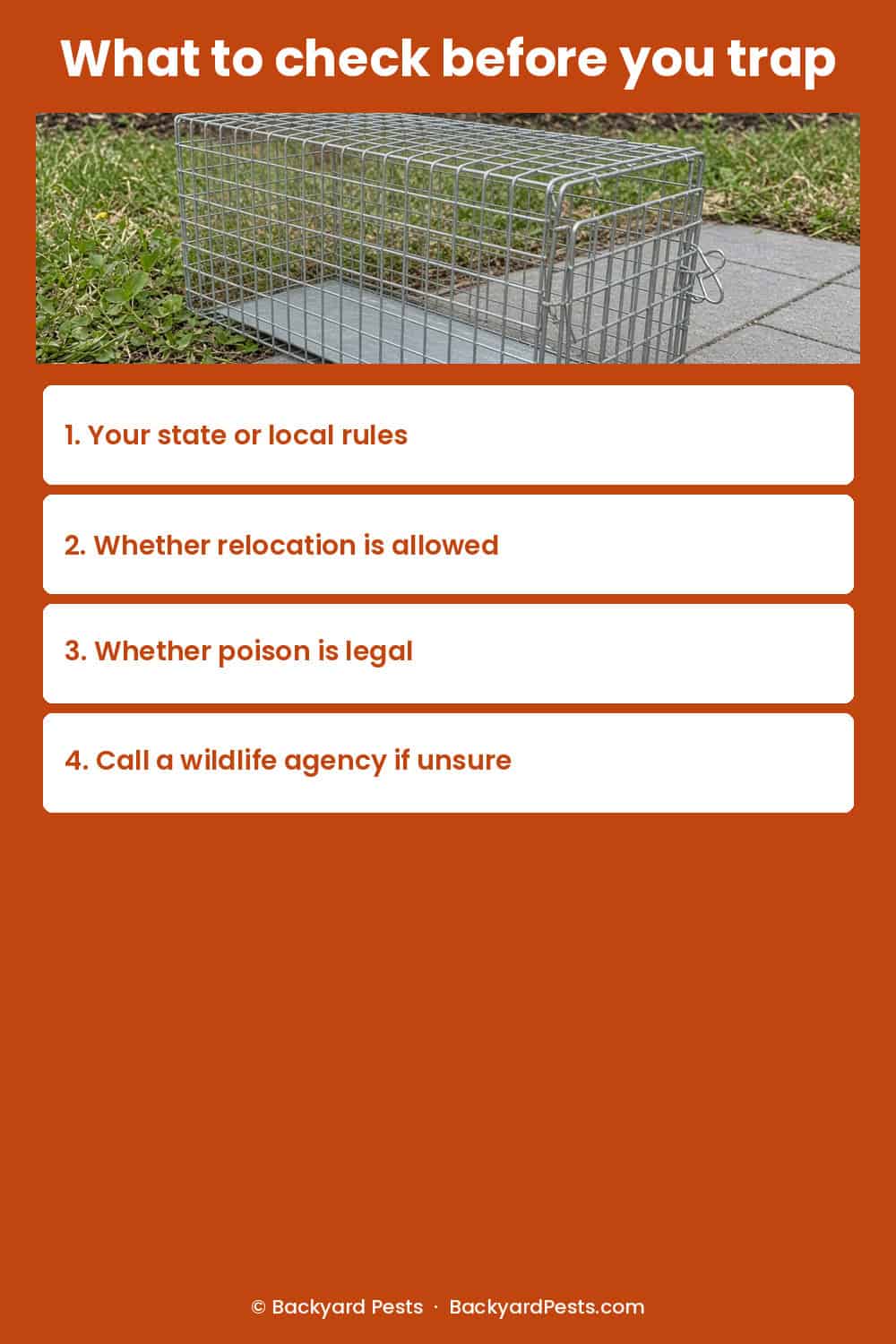
Sometimes yes, sometimes only in certain ways, and sometimes not for every species. Nuisance-wildlife rules are set by states, and cities can add their own ordinances. A method that’s routine in one state can be illegal in the next one.
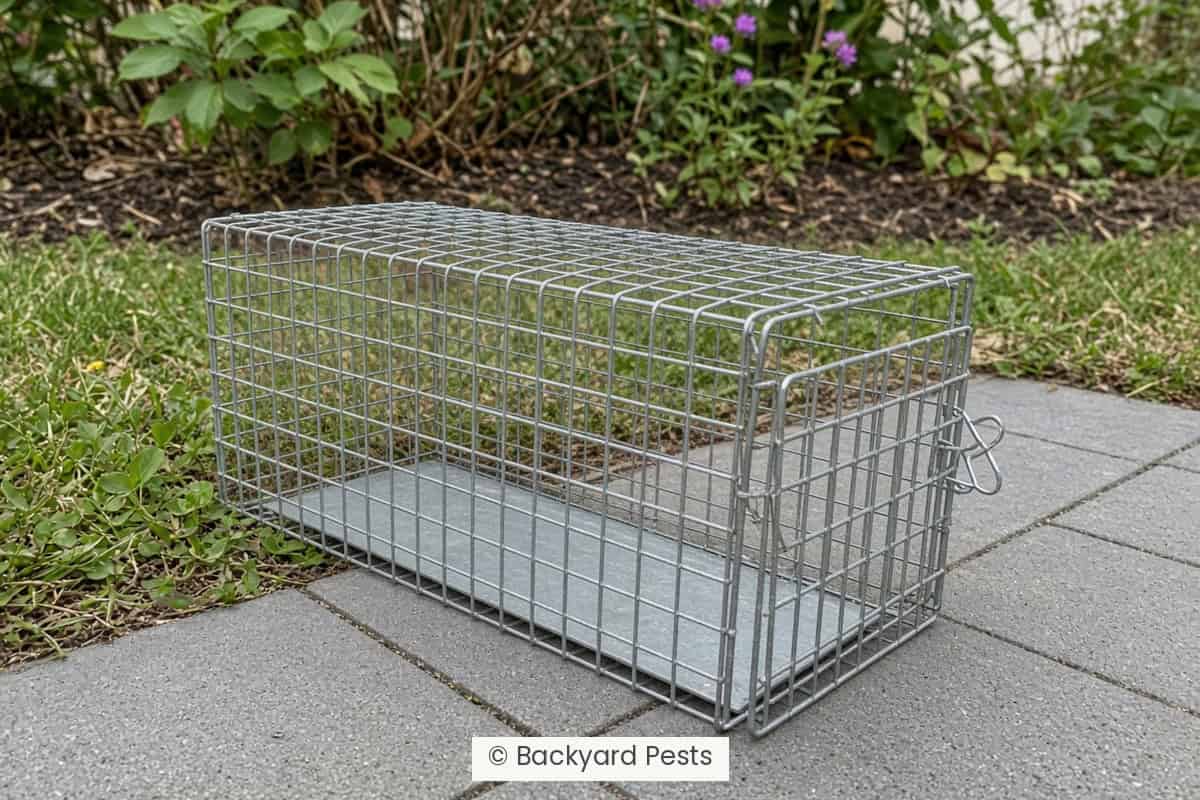
Florida is a useful example of how specific the rules can get, not a template for everywhere else. Florida Fish and Wildlife explains that eastern gray and southern flying squirrels may be taken as nuisance wildlife in some situations, that cage traps may be used, that traps must be checked at least once every 24 hours, and that there are limits on what you may do with a captured animal. It also says the Big Cypress fox squirrel may not be taken as nuisance wildlife without the proper permit. Other states have their own lists, seasons, and permit rules.
If you want the practical how-to, that’s in how to trap a squirrel. Read the law part first.
Is it legal to relocate a squirrel I trapped?
Often, no — or only under tight conditions. Many states require that a trapped squirrel be released on the same property, taken to a licensed operator, or, in some cases, euthanized rather than driven to a new area. Relocation can spread disease, dump a stressed animal into someone else’s territory, and simply be against the regulations you didn’t know existed.
Don’t rely on a “how far away should I take it?” rule of thumb from a forum. If your state allows release, the agency will say where, how far, and whether you need the receiving landowner’s permission. If it doesn’t allow it, moving the animal isn’t a kindness that sits outside the law.
Are flying squirrels or fox squirrels protected?
They can be, depending on where you live. Flying squirrels are protected in some states and localities. Some fox squirrel subspecies are listed or otherwise restricted — Florida’s Big Cypress fox squirrel is the example above. A gray squirrel in an attic and a protected squirrel in a tree are not the same legal animal, even if they both come to a feeder.
If the noises in your house are only at night, confirm what you have before you trap. Here’s why some squirrels come out at night and how to get squirrels out of the attic without starting with a cage.
Is it legal to kill squirrels, or to use poison?
Again, it depends. Some states allow shooting or other take of certain squirrels as small game or as nuisance wildlife, often with location, season, and firearm rules, and often not in a city yard. Poison is a separate problem: many rodent baits are not labeled for squirrels, and using a pesticide off-label can be illegal even if “killing squirrels” is otherwise allowed. There’s also the practical risk to pets and to a carcass in the wall. I wouldn’t use poison in a house; the reasons are in the exclusion posts and in a dedicated look at squirrel poison.
How do I check the rules where I live?
Search for your state wildlife agency plus “nuisance squirrel” or “wildlife control.” The agency may be called a department of natural resources, fish and wildlife, or game and fish. Look for pages on nuisance or human-wildlife conflict, not only hunting seasons. If the wording is unclear, call the agency or hire a licensed wildlife control operator who already works under those rules.
For a found or injured baby, you want a licensed rehabilitator, not a relocation plan. The Humane Society maintains a guide to finding wildlife rescue, and Animal Help Now can help you find local help.
When the law feels like a maze, exclusion is still the cleanest path: get them out through a one-way door, seal the hole with metal, and take away the food that brought them in. You stay on safer legal ground, and you fix the actual problem.
Save this for later: pin this post so the “check your state first” reminder is here before you buy a trap.
Sources:
Florida Fish and Wildlife Conservation Commission, Living with Squirrels and Eastern gray squirrel
Virginia Department of Wildlife Resources, Problems with Squirrels
Wildlife Center of Virginia, Squirrels as Neighbors