If you’ve found dark pellets in the attic, on a porch, or along a fence, you’re probably trying to tell whether they’re squirrel droppings — and how to clean them up without making a worse mess.
I used the CDC’s rodent cleanup guidance as the baseline here, because the safe method is the same even when the animal isn’t a mouse.
Squirrel droppings are larger than mouse pellets, often closer in size to rat droppings, and they’re usually scattered along a run or under a nest. To clean them up, put on gloves, wet the droppings with a disinfectant, let them soak, and wipe them up. Don’t sweep or vacuum them dry.
Identification tells you what you’re dealing with. Cleanup protects you. Sealing the hole stops the next pile. Let’s take those in order.
What do squirrel droppings look like?
They’re small, dark, oval or slightly rounded pellets, larger than a mouse’s tiny pointed droppings and often in a similar size range to a rat’s. Fresh droppings are darker and softer; older ones dry out and can look grayish. You’ll usually find them under a nest, along a beam, on a porch rail, or at the base of a tree or attic run — not in one tight corner the way a house mouse sometimes leaves a drawer full of pellets.
Photos and more indoor signs are in 9 easy ways to tell if you have squirrels in your house. If you’re torn between squirrel and rat, use the squirrel vs rat guide, which includes droppings as one of the differences. And if the pellets are truly tiny, think mice first, and see how to clean up mouse droppings — the wet-cleaning steps are the same idea.
Are squirrel droppings dangerous?
Treat them as a mess worth cleaning carefully, not as something to panic over or to ignore. The CDC says diseases from rodents spread mainly when people breathe in contaminated dust, which is why you shouldn’t sweep or vacuum dry droppings, urine, or nesting material.
Hantavirus pulmonary syndrome in the United States is associated mainly with certain wild mice, especially the deer mouse, not with squirrels as the usual source. That is not a reason to be sloppy in an attic. Wear gloves, wet the waste, wipe it up, and wash your hands. If you feel unwell after a heavy cleanup, talk to a healthcare provider and mention the exposure. For the broader health picture, see whether squirrels are dangerous.
How do I clean squirrel droppings in the attic or on a hard floor?
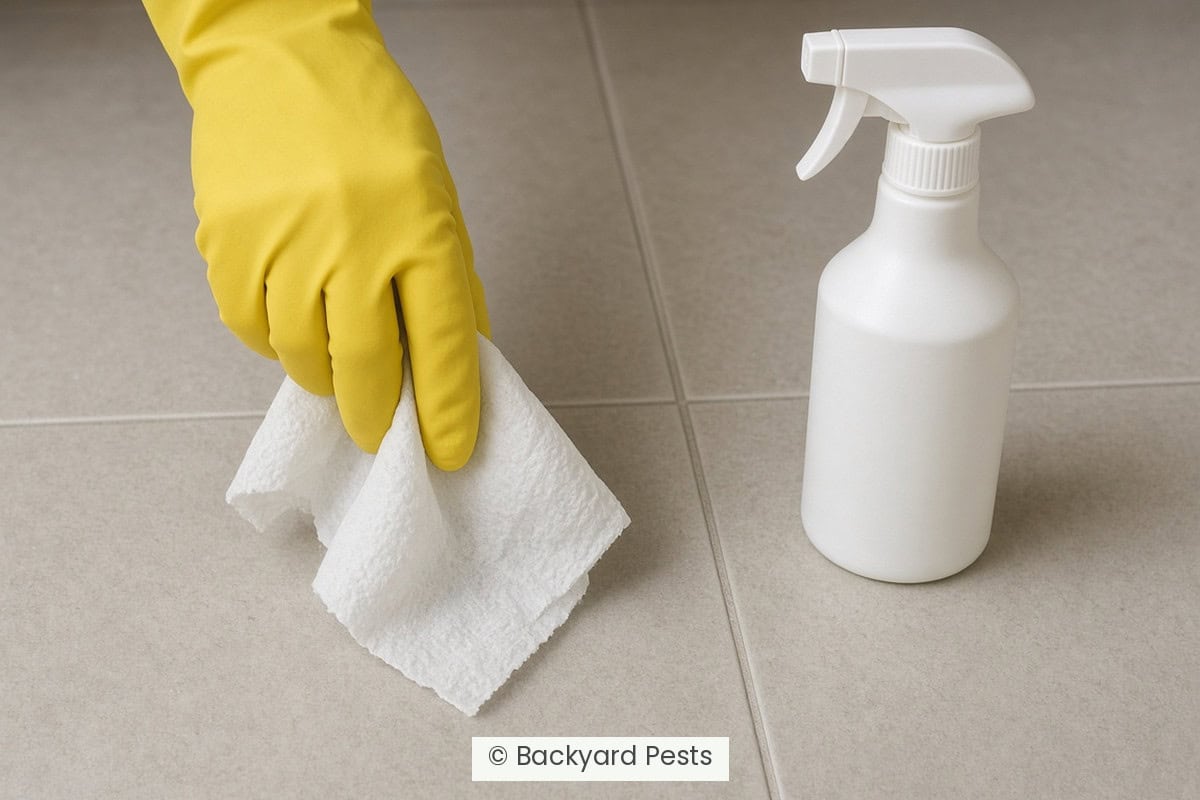
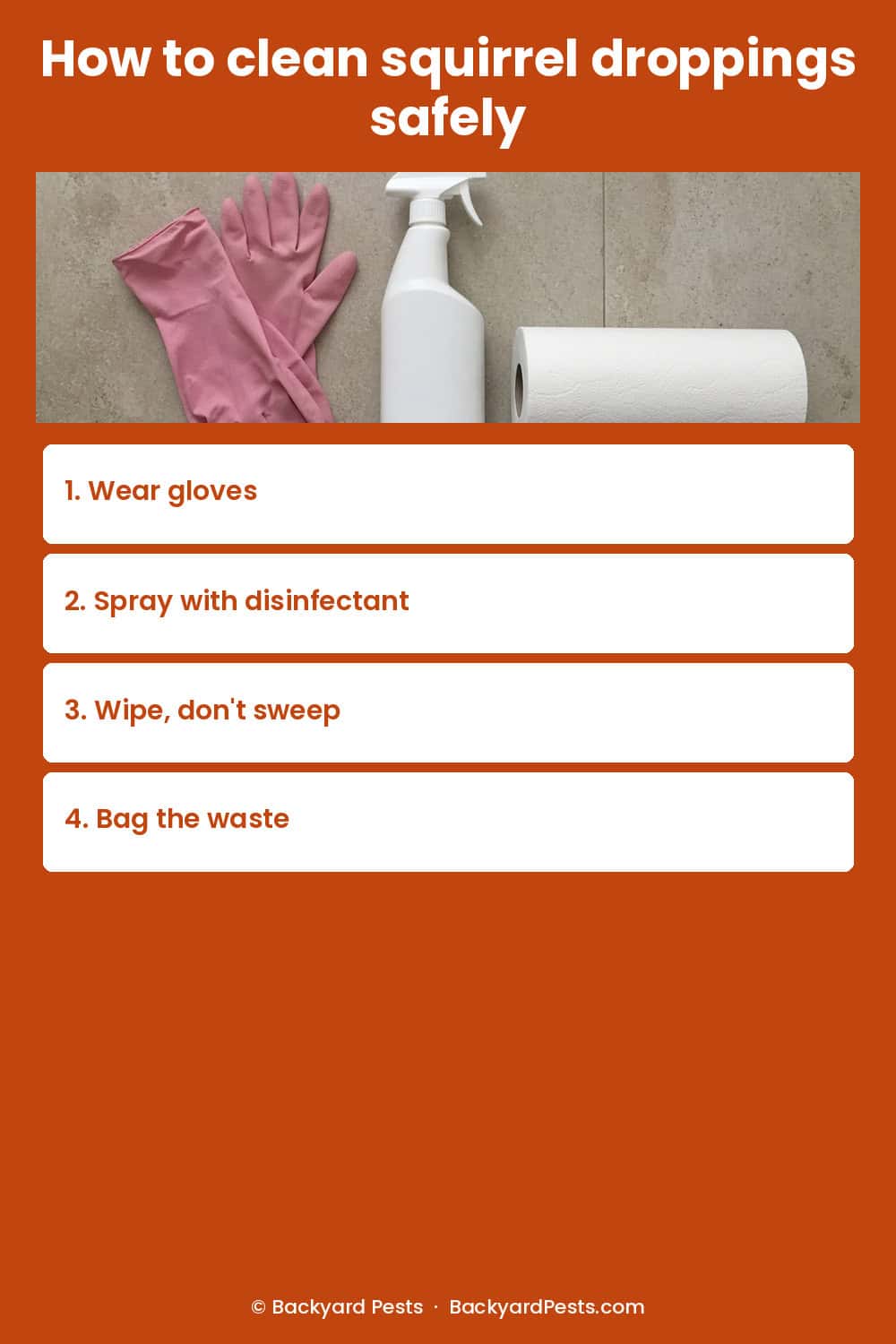
The CDC method is straightforward, and it works on wood, vinyl, concrete, and other hard surfaces:
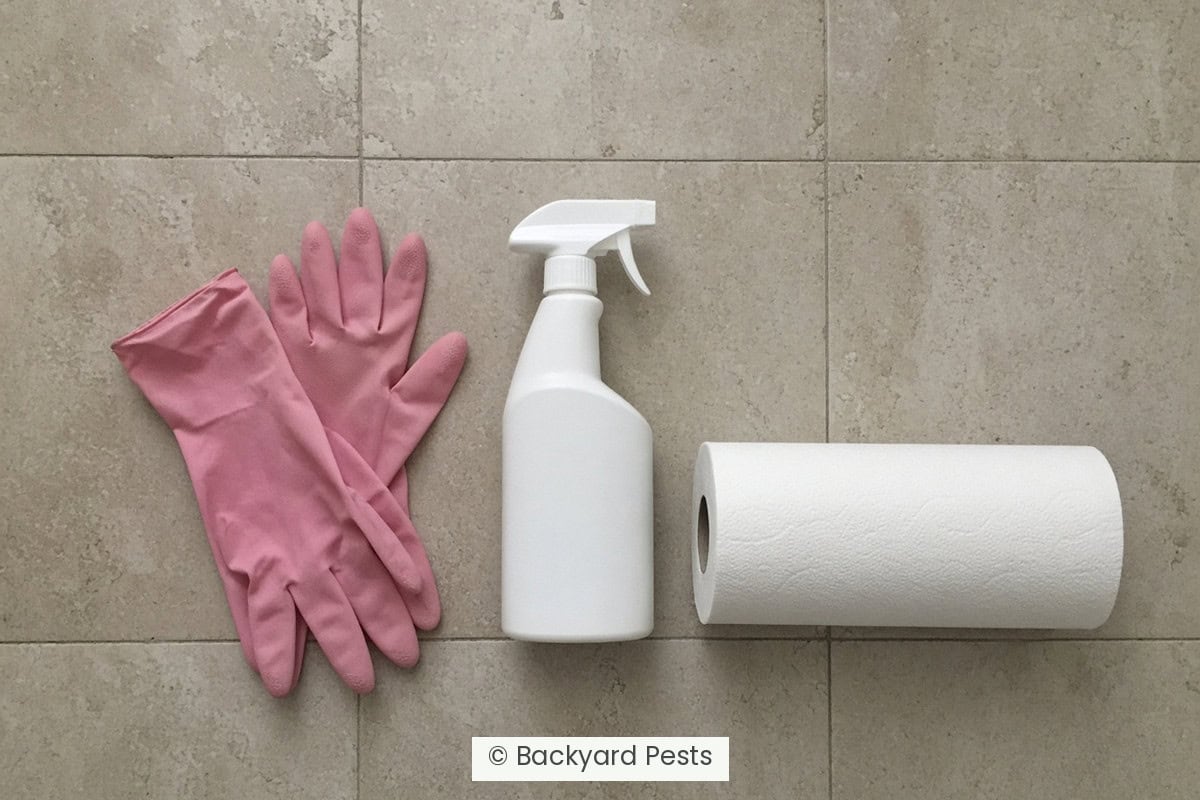
- Put on rubber or plastic gloves.
- Ventilate the space if you can. For a closed-up attic or outbuilding, the CDC says to open doors and windows and leave for 30 minutes before you start.
- Spray the droppings and any urine or nesting material with a household disinfectant — Clorox Clean-Up cleaner with bleach is one option if the label lists it as a disinfectant — or with a fresh bleach solution. The CDC’s mix is 1.5 cups of household bleach in 1 gallon of water (or 1 part bleach to 9 parts water). Let it soak for 5 minutes, or as long as the product label says. A bleach pump sprayer helps in a large attic.
- Wipe the waste up with paper towels, bag it, and put it in a covered trash can.
- Mop or wipe the area again with disinfectant. Wash your gloved hands, take the gloves off, then wash your hands with soap and water.
Bag soiled insulation and nesting material and throw it out. Don’t use a high-pressure sprayer that blasts dust around. If the infestation is heavy, the CDC recommends more protection — coveralls, eye protection, and a properly fitted respirator with a HEPA filter — or hiring a professional.
What about droppings on carpet or in a nest?
Start the same way: gloves, wet the pellets, wait, lift them off. Then shampoo or steam-clean the carpet or upholstery with a product meant for that job. Don’t vacuum first.
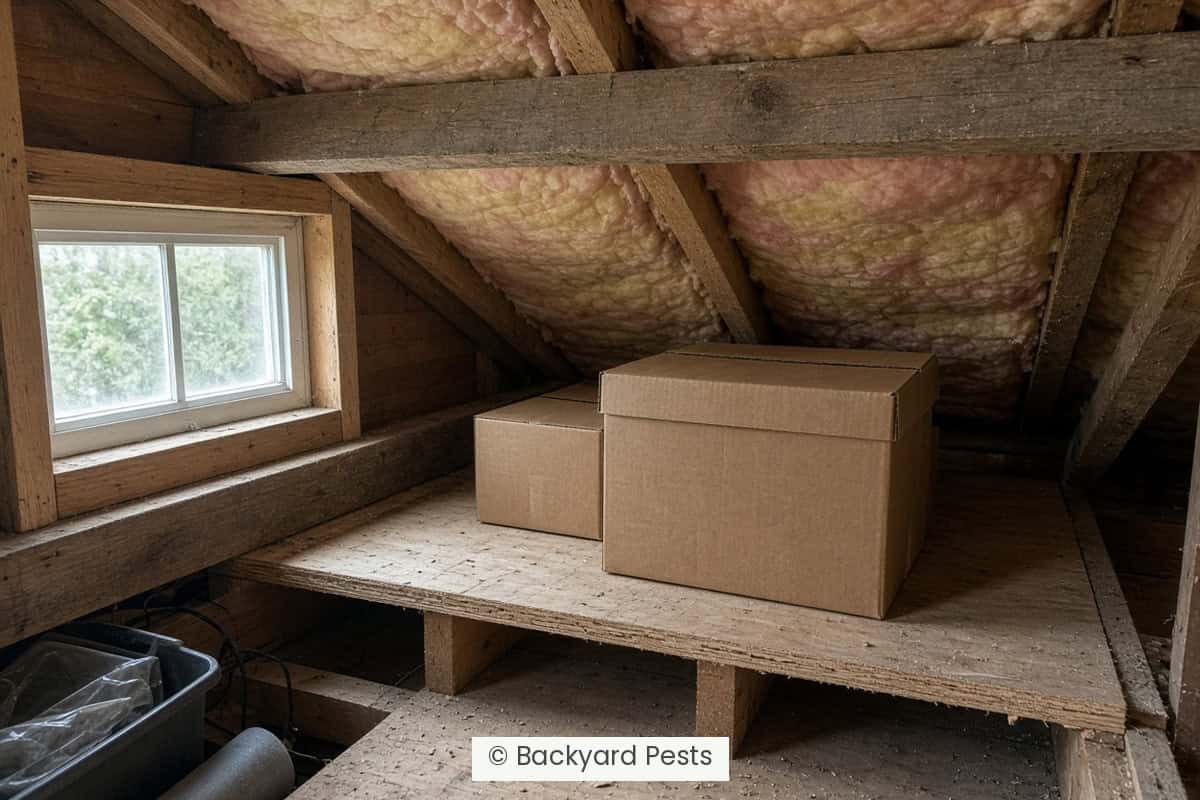
A nest in the attic should come out once the squirrels are gone. Evict first, so you’re not cleaning under an active family — how to get squirrels out of the attic and when squirrels have babies cover the timing. Then bag the nest, clean the area, and seal the hole with metal so you’re not doing this again next season. That’s the last step in getting squirrels out of the house.
Save this for later: pin this post so the “wet, don’t sweep” steps are here before you reach for a broom in the attic.
Sources:
US Centers for Disease Control and Prevention, How to Clean Up After Rodents
US Centers for Disease Control and Prevention, About Hantavirus
US Centers for Disease Control and Prevention, Hantavirus Prevention