If your lawn looks like someone stubbed it with a trowel overnight, you’re probably wondering why squirrels are digging in the yard — and whether you’ve got a burrow problem.
Most shallow, scattered holes in a lawn or mulched bed are tree squirrels burying food or digging it back up, not a colony of ground squirrels. You can fill the holes, cover new grass seed or beds with mesh, and take away easy food. True burrows with mounds of dirt, and stocky squirrels that live in the ground, are a different pest.
Once you know which kind of digging it is, the fix makes more sense. This sits inside how to keep squirrels out of your garden.
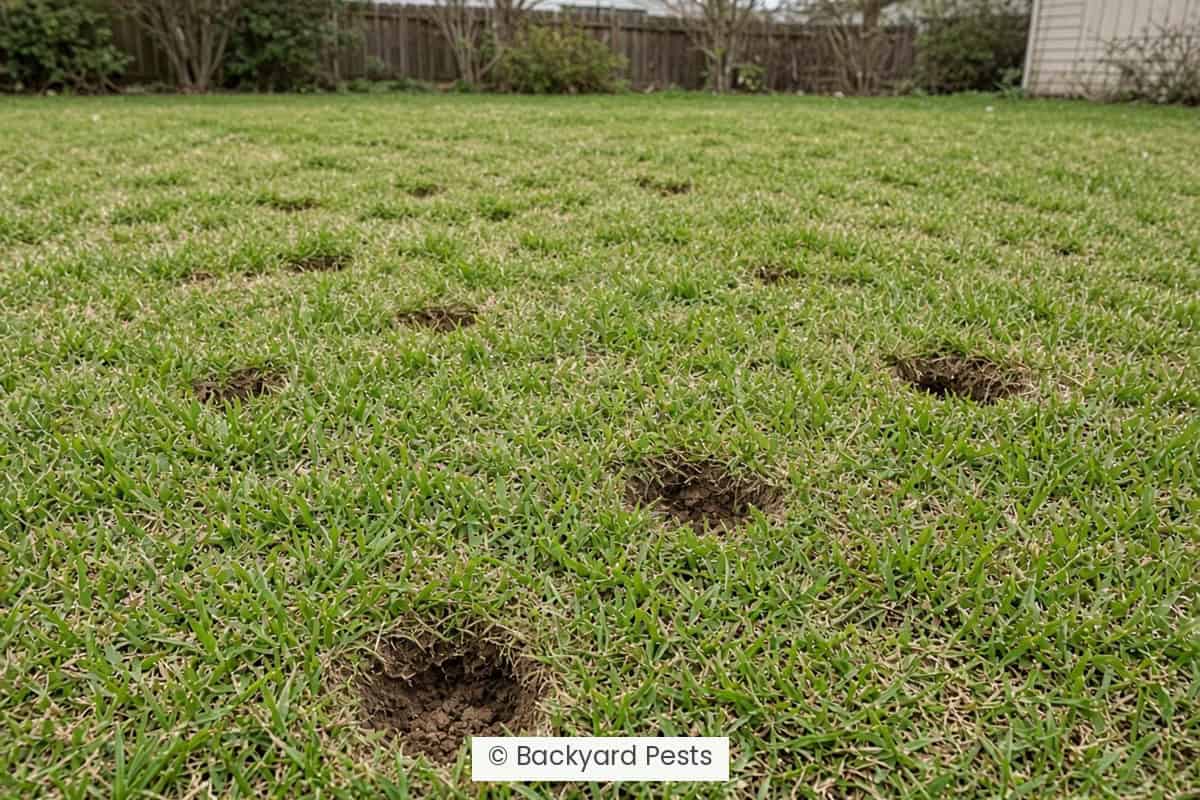
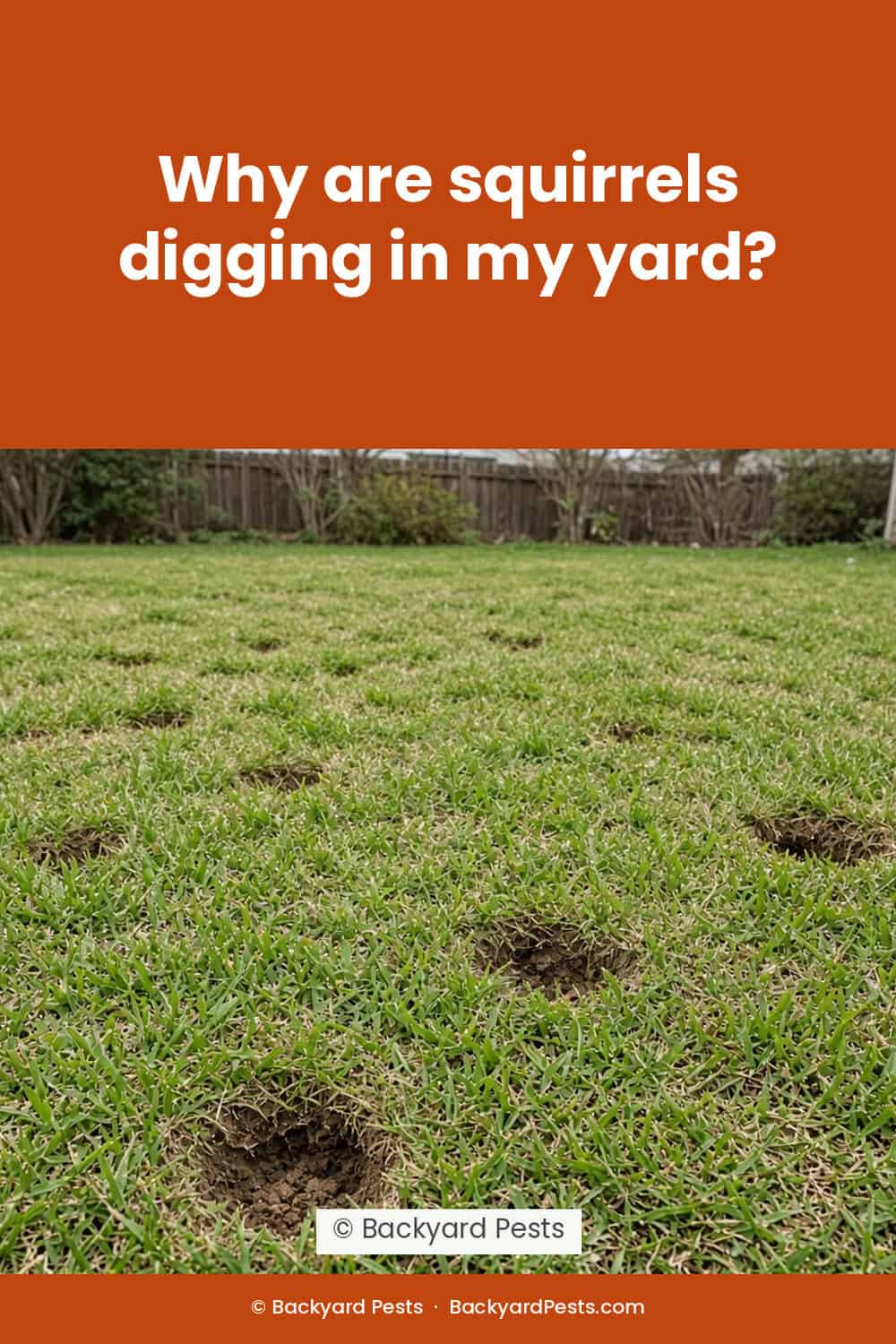
Why are there holes all over the lawn?
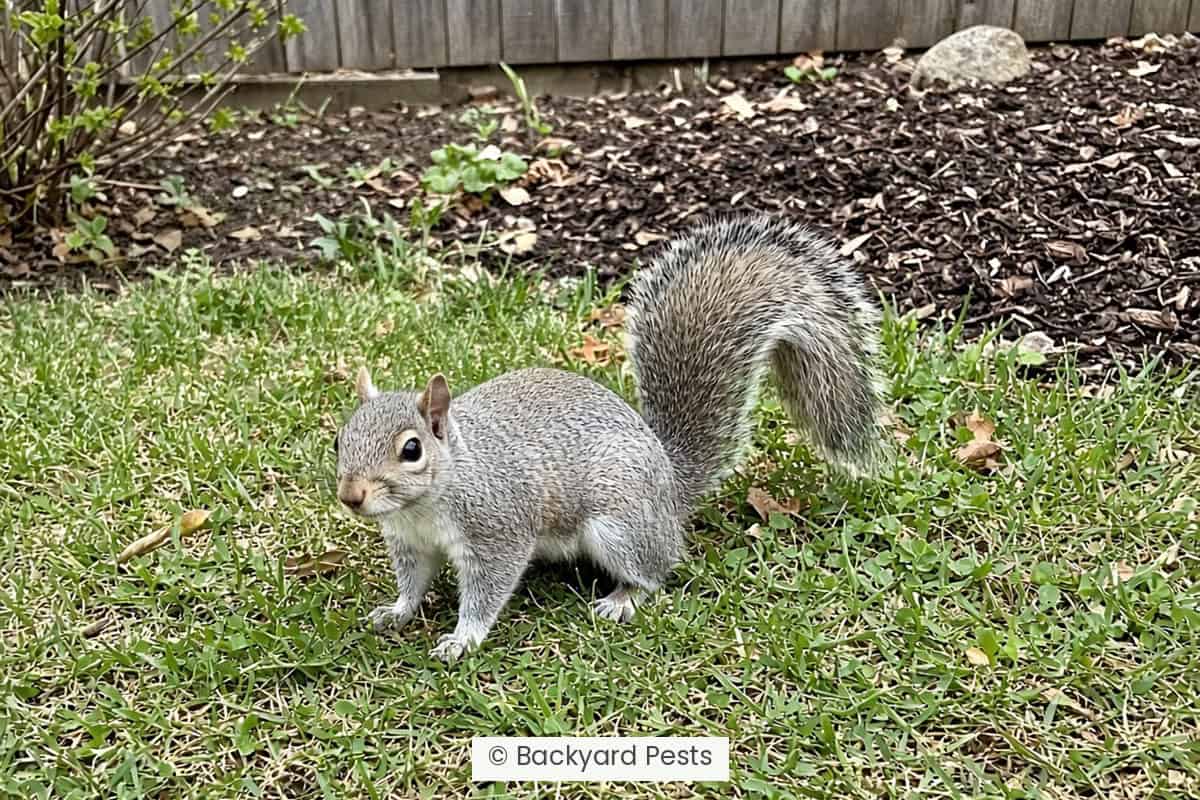
Tree squirrels hide nuts, acorns, and seeds in lots of small caches, then come back later — including in winter, because they don’t hibernate in the way people imagine. A freshly watered lawn, new seed, or loose mulch is easy digging, so it gets tested first. You’ll often see this in fall and spring, and after you fill the bird feeder.
These holes are usually shallow and scattered, without a tunnel system. If you also have tulips disappearing, that’s the same habit aimed at bulbs; here’s how to stop squirrels from digging up bulbs.
Is this a ground squirrel, a gopher, or a chipmunk?
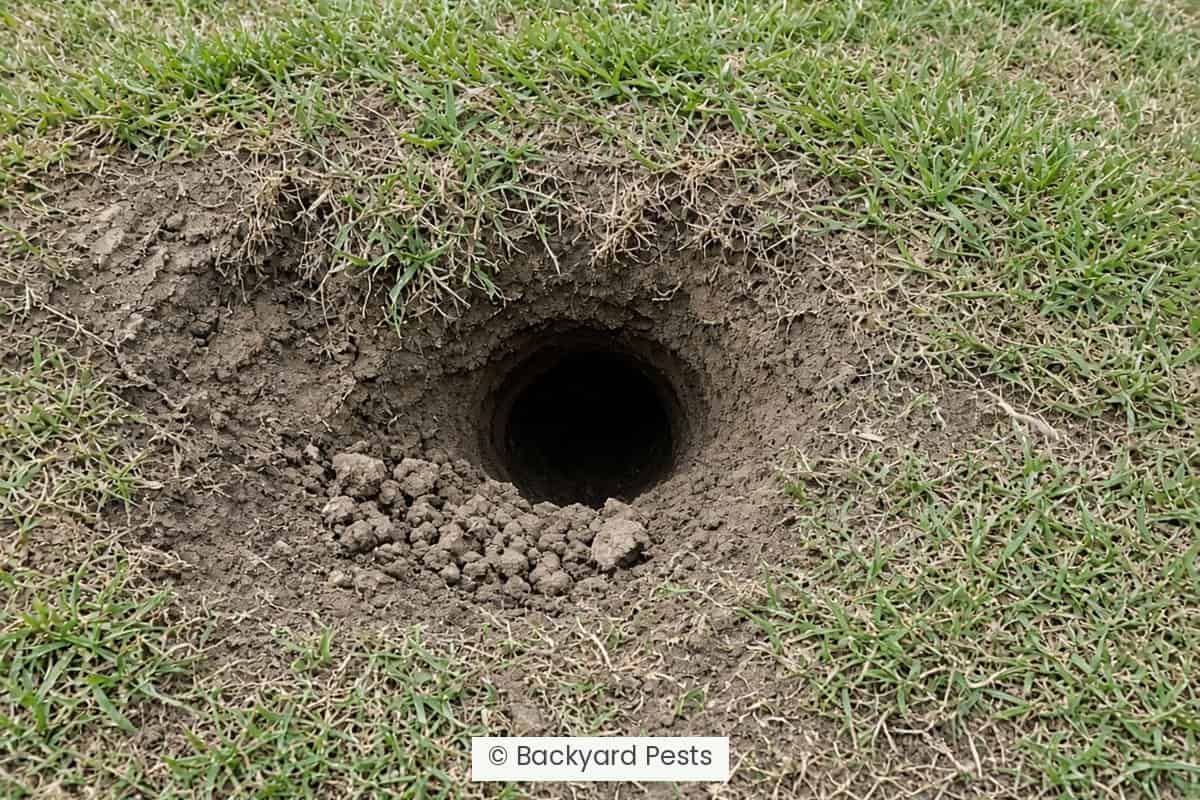
Ground squirrels live in burrows, often in groups, with real tunnels and dirt mounds. That’s a different animal and a different plan: how to get rid of ground squirrels. Gophers stay mostly underground and leave fan-shaped mounds; groundhogs are much larger. I compare some of those diggers in gophers vs groundhogs. Chipmunks are smaller and striped, and they also burrow, but the holes are usually neater and the animal looks different — more on that in a squirrel vs chipmunk comparison if you’re unsure.
If you see a gray or fox squirrel digging a two-inch pit and hopping away, you’re looking at a cache, not a den.
How do I stop squirrels from digging?
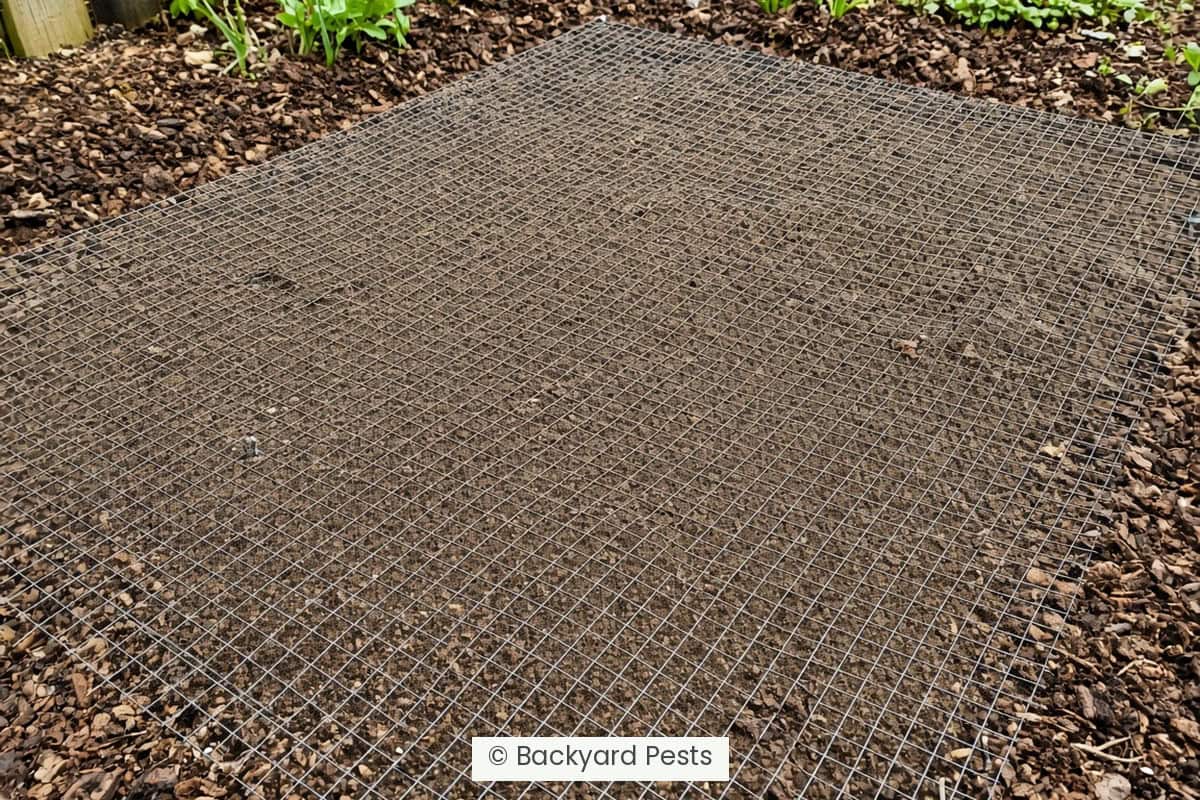
Protect the spots you care about, and make the yard slightly less worth the effort. Cover new grass seed or a prized bed with mesh or hardware cloth, pinned tight, until the grass is up or the soil has settled. Florida’s wildlife agency suggests covering newly seeded areas with mesh fastened to the ground, which is the same idea. A motion-activated sprinkler startles daytime diggers off a fresh lawn. Taste sprays such as hot pepper wax can be a top-up on a small bed; they wash off, so they’re not a lawn-wide solution.
Then cut the buffet: pick up fallen nuts and fruit, and look at the bird feeder. Spilled seed is often why the lawn became a pantry. Here’s how to keep squirrels out of a bird feeder. Filling the holes and tamping the soil is fine, and you’ll probably do it more than once in cache season. That’s annoying, and it’s also normal squirrel behavior — not a sign the yard is “infested” in the burrow sense.
Save this for later: pin this post so you can tell a cache hole from a burrow the next time the lawn is pocked with little pits.
Sources:
Florida Fish and Wildlife Conservation Commission, Living with Squirrels
University of California Statewide IPM Program, Tree Squirrels and Ground Squirrel