If squirrels are in the attic or wrecking the garden, poison can look like the simple answer. I don’t think it is, and I looked at why wildlife and pesticide rules point you away from it.
You usually should not use squirrel poison. Many rodent baits are not labeled for squirrels, which can make that use illegal. A poisoned squirrel may die in a wall or where a pet, owl, or hawk can find it. Exclusion — getting them out, then sealing holes with metal — fixes the problem poison leaves untouched.
I’m not a fan of reaching for poison when there’s a clearer method. Here’s why this one is a poor fit, and what to do instead.
Is squirrel poison legal to use?
Only if the product is labeled for squirrels and you follow that label. In the United States, the label is the law. A bait sold for rats or mice is not automatically legal to use on squirrels. If squirrels aren’t on the label, don’t “just try it.”
Even when a product is allowed, your state may have extra rules on taking squirrels. That’s the same patchwork I outline in whether it’s legal to trap or relocate squirrels. When in doubt, check the label and your state wildlife agency, not a social media tip.
What happens if a squirrel dies in the wall?
It smells, often for days, and it may be hard to reach without opening the wall. That’s a common end for a poisoned animal, because it doesn’t drop neatly next to the bait station. The same risk is why I don’t like poison for mice in a house either, but a squirrel is large enough that the smell is hard to ignore.
There’s also secondary poisoning. Pets can find a carcass or a bait block. Owls, hawks, and other predators can eat a poisoned squirrel. That’s a real cost, and it’s one reason agencies prefer exclusion around homes.
What should I use instead of poison?
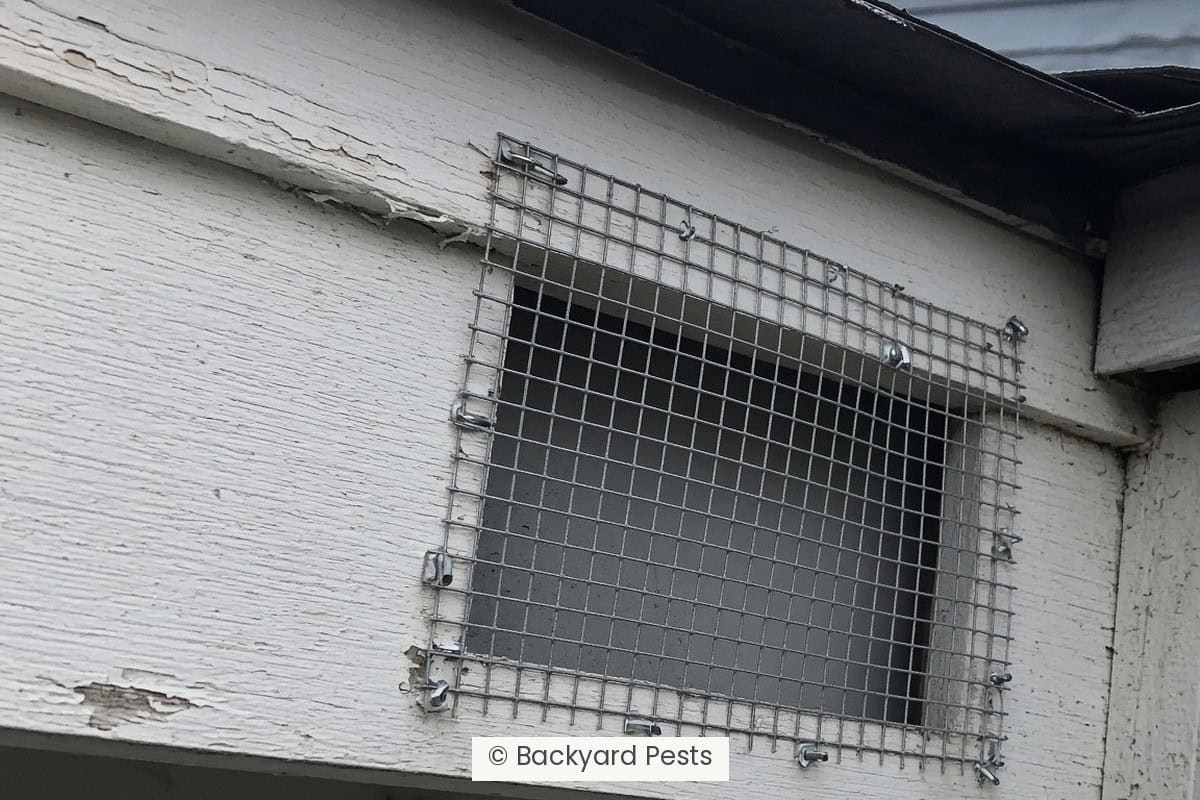
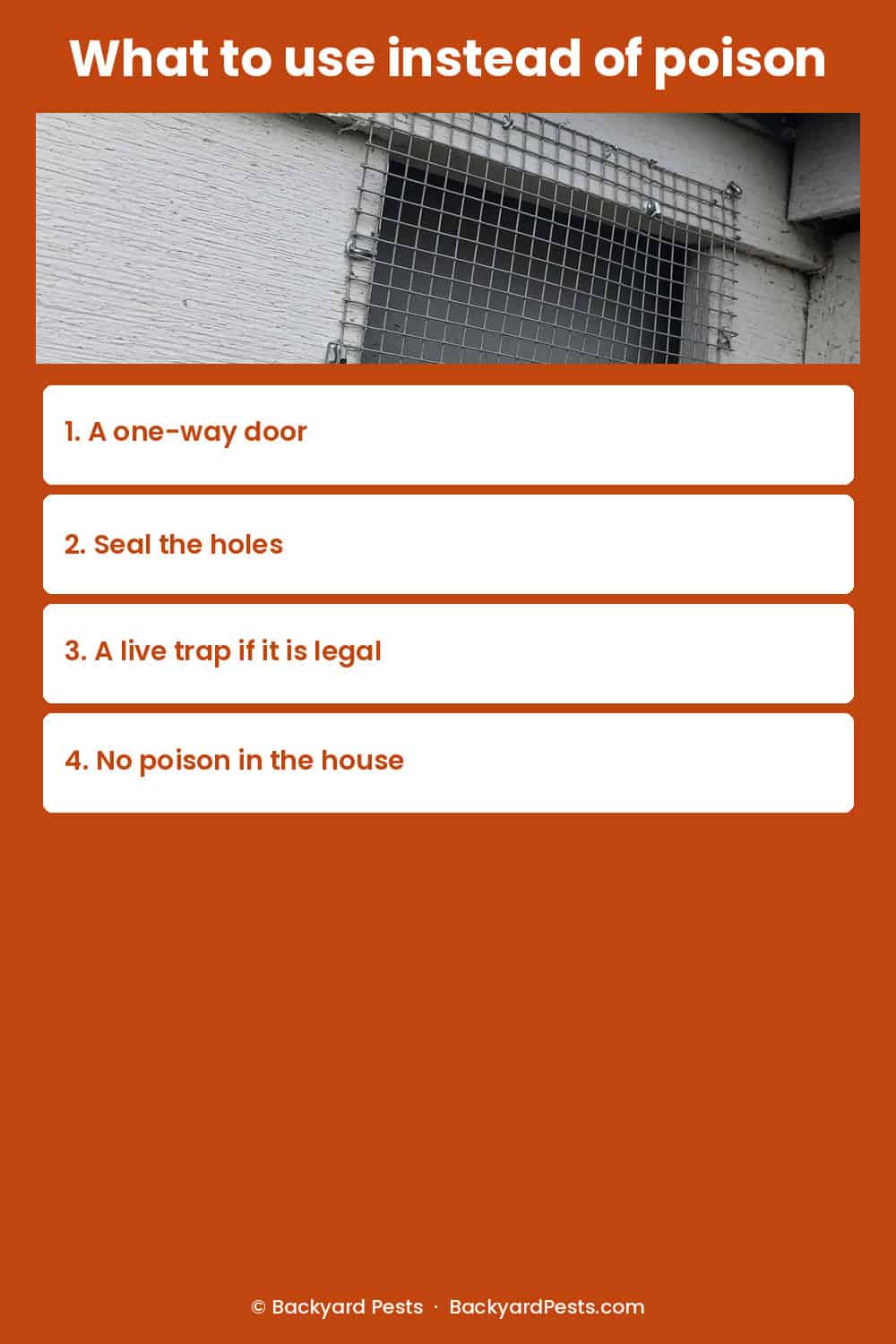
If they’re in the house or attic, get them out with a one-way door after you’ve checked for babies, then seal every hole with metal. That’s how to get rid of squirrels in the house and how to get squirrels out of the attic. Materials are in how to seal squirrel entry holes.
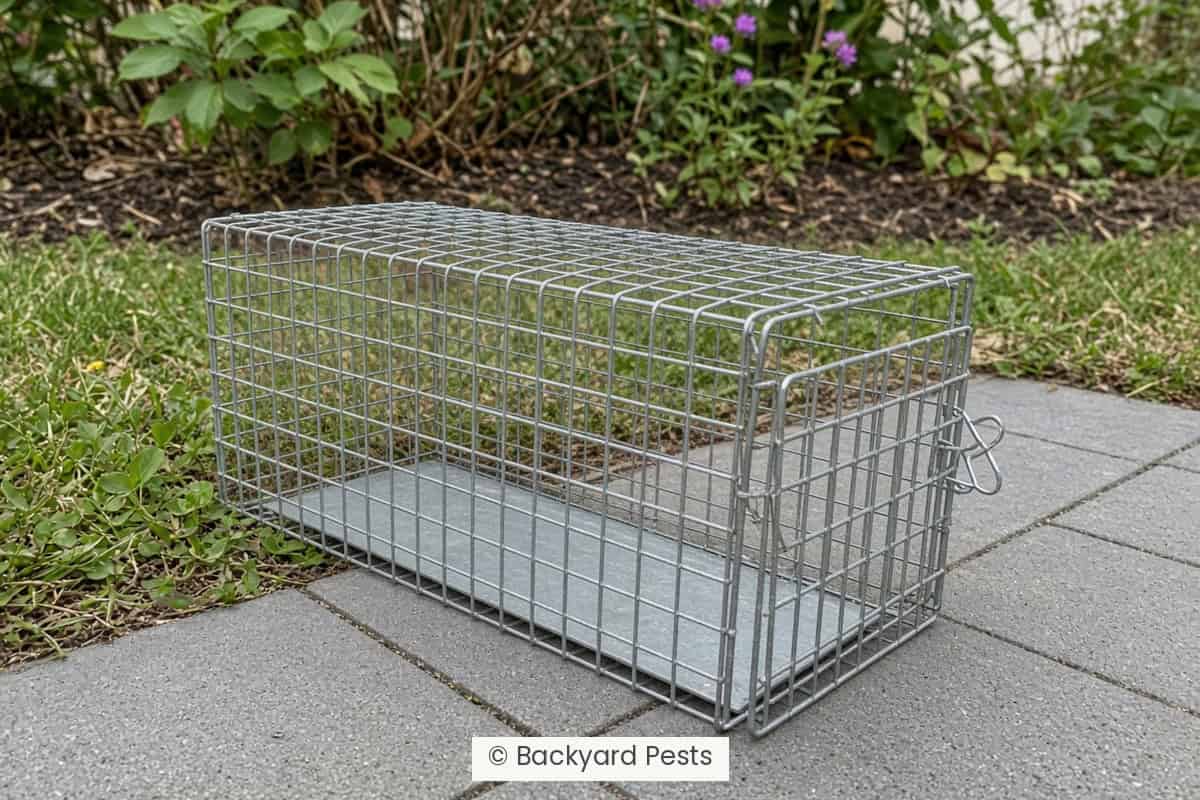
If you need to catch a particular animal, a live cage used within the law is the more straightforward option — see how to trap a squirrel. In the garden, barriers and fewer attractants do more than any bait: how to keep squirrels out of your garden.
Smells and taste sprays, from smells squirrels hate and the best squirrel repellent shortlist, can help at the edges. They are not poison, and they’re not a substitute for a metal patch either. Skip mothballs. They aren’t labeled for this job, and the fumes are a problem in a home or garden.
Are “poison peanuts” or homemade baits any better?
No. Mixing a household chemical with food and leaving it in the yard is dangerous to children, pets, and anything else that finds it, and it still doesn’t close the hole. If a product isn’t labeled for this use, don’t invent a version in the kitchen.
The slower method is the one that lasts: evict, seal, and stop feeding the problem. It takes a little more work in the first week, and you don’t spend the second week trying to find a dead squirrel in the wall.
Save this for later: pin this post so the “don’t poison the attic” reminder is here when the bait aisle looks tempting.
Sources:
University of California Statewide IPM Program, Tree Squirrels
Florida Fish and Wildlife Conservation Commission, Living with Squirrels
Virginia Department of Wildlife Resources, Problems with Squirrels
Wildlife Center of Virginia, Squirrels as Neighbors