If a heavy, rotting smell has shown up in one room or in the attic, and you’ve had squirrels in the house, you’re probably dealing with a dead squirrel — and wondering how long the smell will last.
The honest answer is that the smell usually lasts until the carcass is gone and the area is cleaned, not until you light enough candles.
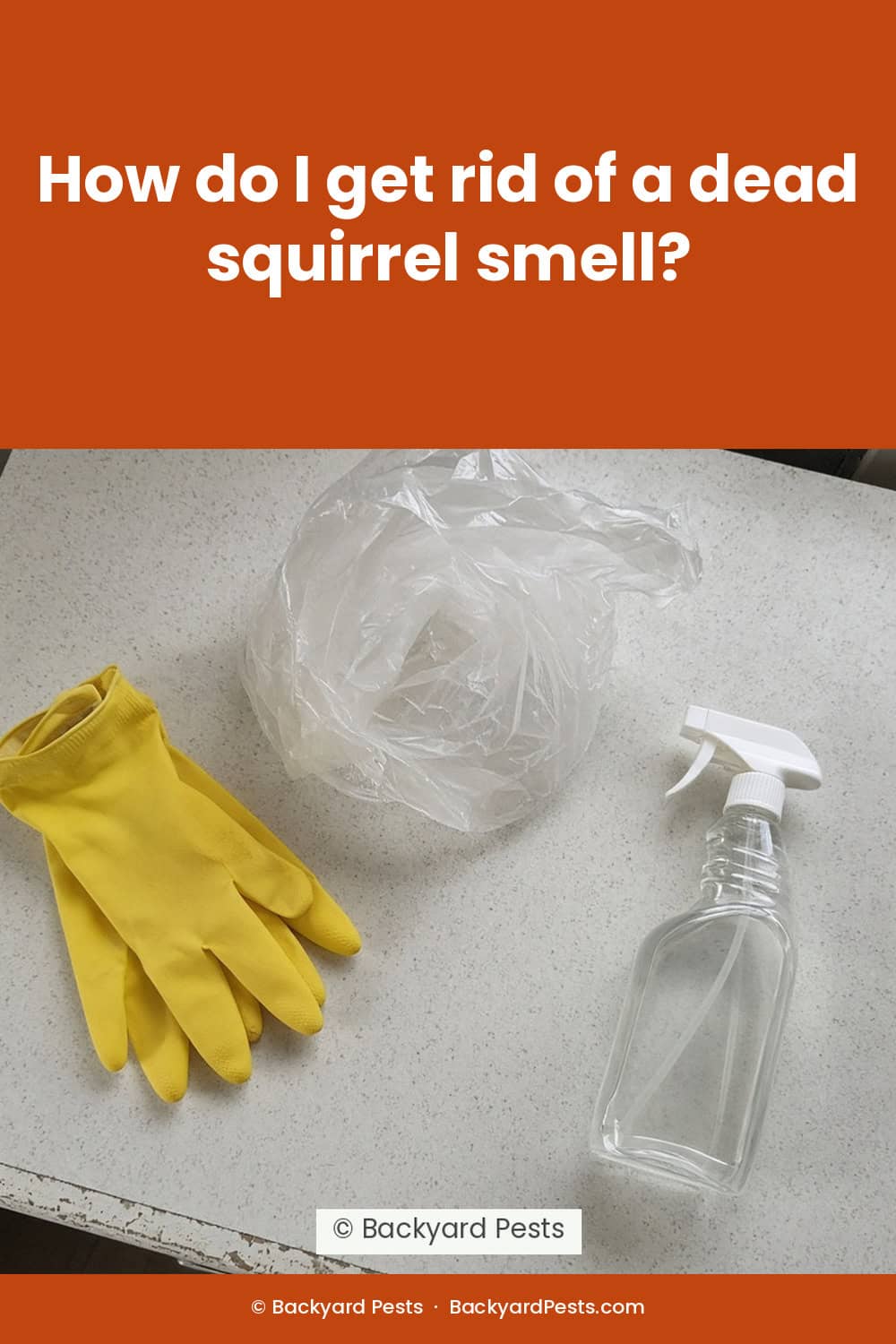
To get rid of a dead squirrel smell, find the carcass, wear gloves, bag it, and clean the area with a disinfectant. If the animal died in a wall, you may need to open a small section to reach it. Air the space, throw out soiled insulation, and seal the entry hole so it doesn’t happen again.
Don’t put off the search hoping it will fade in a day. Here’s how to find it, how to clean up, and how to avoid a repeat.
How long does a dead squirrel smell last?
It depends on the size of the animal, the temperature, and whether you can reach the body. In a warm attic, the smell can get strong quickly and hang around until the carcass dries out or is removed. In a wall, it can last longer simply because you can’t get to it. Once the body is bagged and the area is cleaned, the odor drops a lot; lingering smells usually mean there’s still material, insulation, or another carcass you missed.
How do I find a dead squirrel in the attic or a wall?
Follow your nose to the strongest spot, then look in good light. In an attic, check around the nest, along the eaves, and near the entry hole. A flashlight helps. In a wall or ceiling, the smell is often strongest at one outlet, vent, or stretch of baseboard; the carcass may sit in the cavity right there, or a little higher toward the roofline.
If you still have live squirrels, evict them first — out of the attic or out of the walls — so you’re not closing a family in. A dead smell plus ongoing scratching can mean one animal died and others are still using the run.
How do I remove it and clean up?
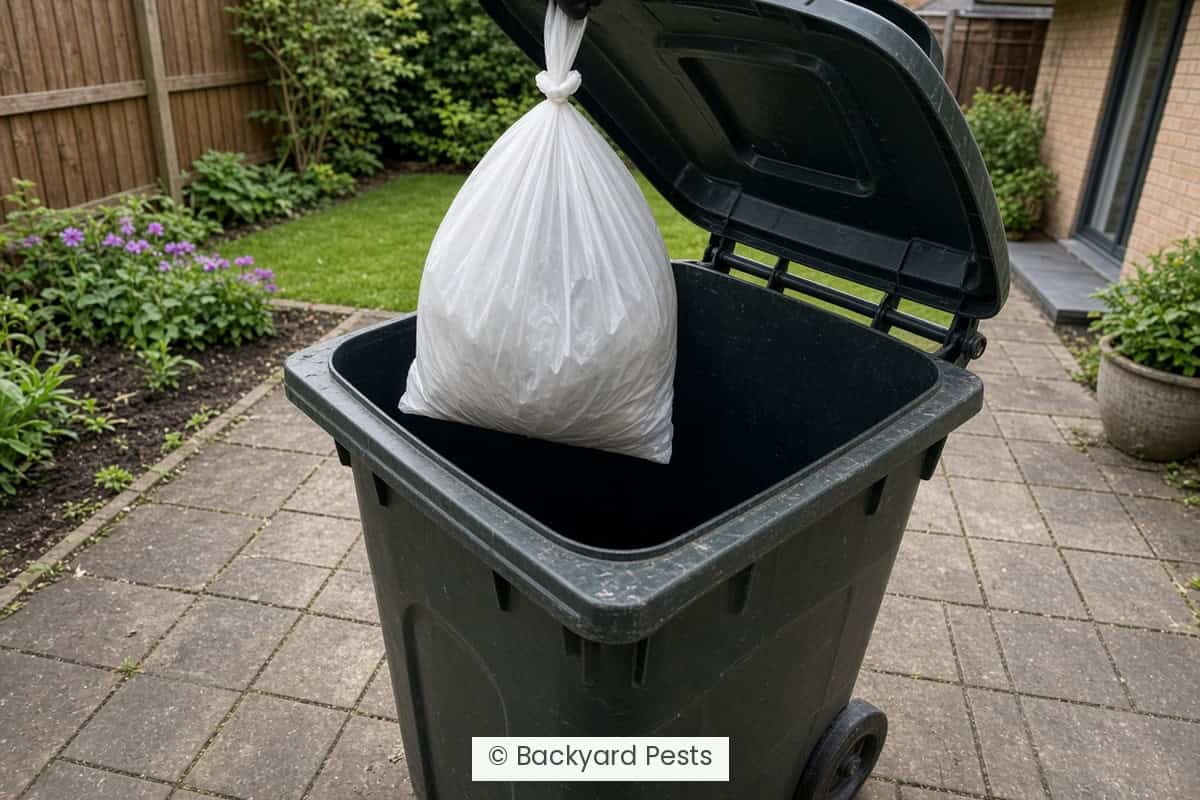
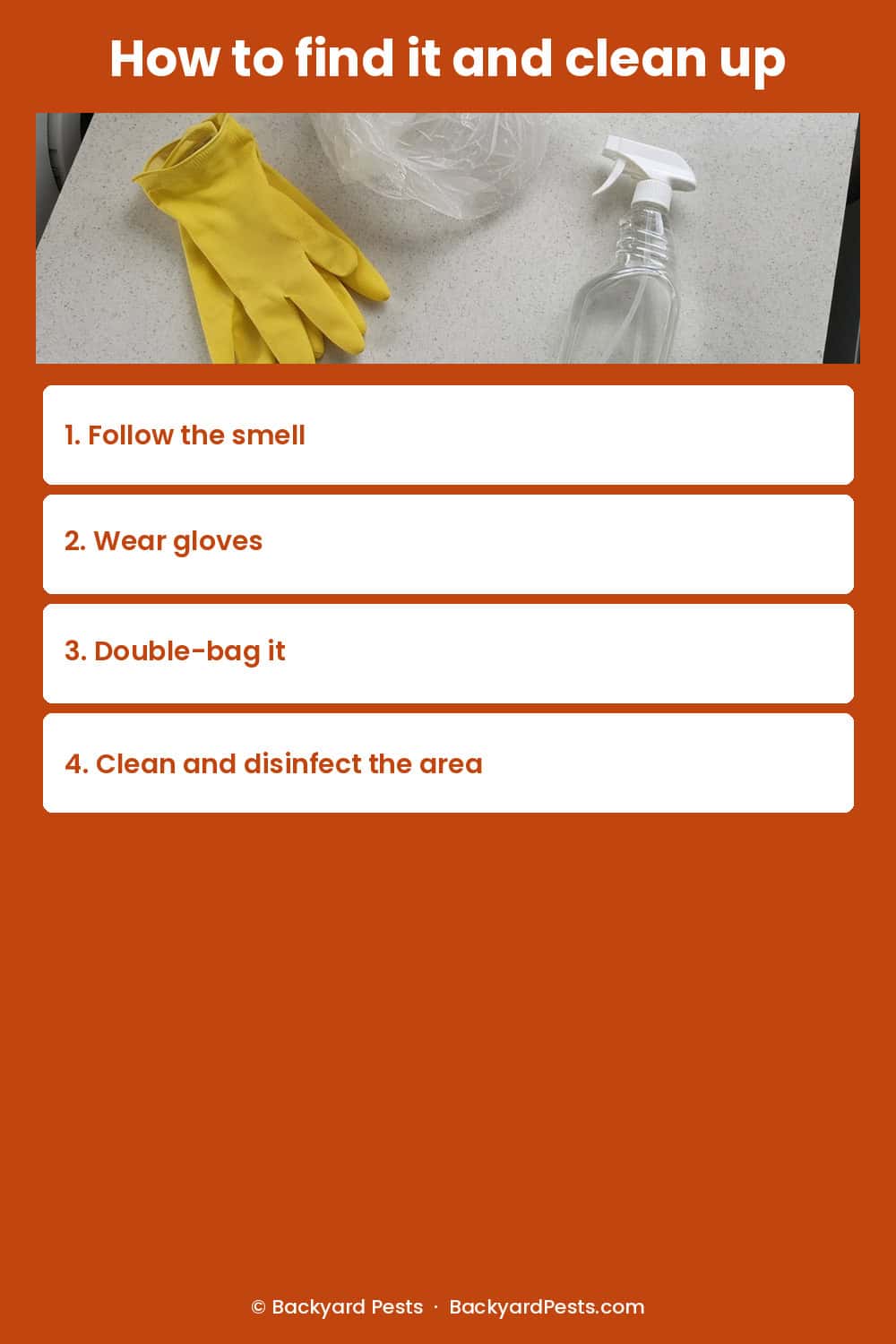
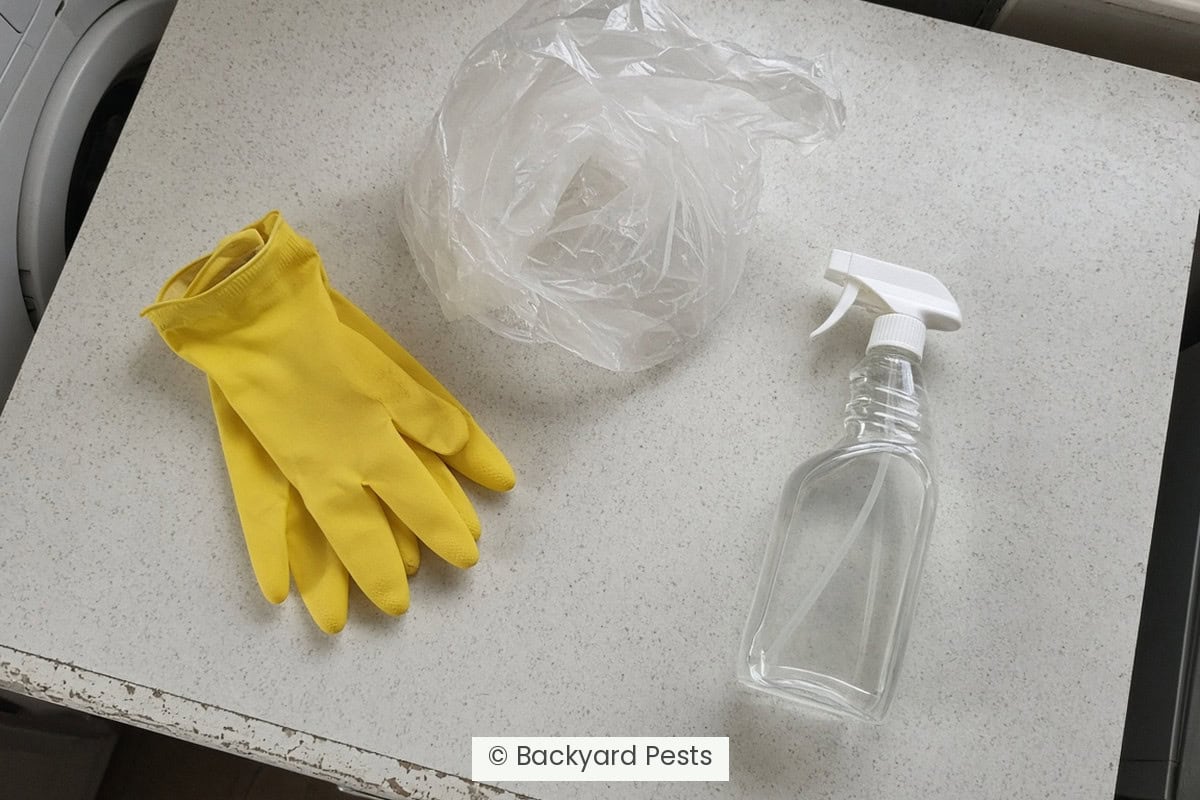
Wear gloves. Don’t handle the carcass with bare hands. Double-bag it, tie the bags closed, and put them in a covered outdoor trash can. Then clean the area the CDC way: wet any droppings, nest, or stained insulation with a disinfectant such as Clorox Clean-Up with bleach (if the label says disinfectant), wait, and wipe or bag the waste. The official steps are in the CDC’s cleanup guidance, and I use the same method for squirrel droppings.
Throw out insulation that is soaked or packed into the nest. Air the space. Wash your hands when you’re done. If you can’t reach a carcass in a wall, a wildlife control operator or a contractor may need to cut a small access hole, remove it, and patch the wall.
Odor sprays and bowls of vinegar can take the edge off a room. They will not fix a body still sitting in the cavity.
How do I stop this happening again?
Find out how the squirrel got in, and seal that hole with metal after you’re sure no one is left inside. That’s how to seal squirrel entry holes and the last step of getting squirrels out of the house.
Don’t use poison to “finish the job.” A poisoned squirrel is a common way to end up with a smell in a wall in the first place; here’s why I wouldn’t use squirrel poison. If you’re worried about disease, see whether squirrels are dangerous, and call a doctor if you feel unwell after a messy cleanup.
Save this for later: pin this post so the find-and-bag steps are here if the smell shows up again.
Sources:
US Centers for Disease Control and Prevention, How to Clean Up After Rodents